

Every year, I write something specifically for Thanksgiving, either exploring the American idea or something I am personally grateful for – oftentimes they intersect. Last year, I wrote about the joys of parenthood, the year prior about the wonders of modernity, and the year before that about America’s unique spirit of gratitude. This year, I feel grateful for one of the foundational cornerstones of our national idea: the speech protections in the First Amendment of the US Constitution. This may seem odd given the negative press it so often gets, as well as the fact that much of my recent writing has been about despicable uses of that freedom to push antisemitism. But without those protections for our God-given liberties, America would simply cease to exist as the nation that our founders envisioned 250 years ago.
Those liberties, the innate human rights that attach to every human upon their birth, are not granted to us by government, but by God. It is not the nation-state that gives human beings the ability to form personal opinions, have a conscience individual to themselves, or act in accordance with those ideas. Those abilities are part of our very existence as homo sapiens, no matter how differently we may choose to exercise them. The idea that individual persons have interior lives and personal thoughts that are worth preserving, investigating, and espousing to other humans is foundational to Western civilization and forms the basis of much Enlightenment political and philosophical thought. The ability to conceive of complex ideas, make choices based on reasoning, imagine, and engage in higher-order thinking are what make us human and separate us from the other members of the animal kingdom. And as much as that individual consciousness is innate to mankind, the ability and desire to communicate those interior thoughts to others may be even more profoundly intertwined with our human nature.
We are relational beings who work, live, and create in communities. That organizing capacity is hypercharged by our use of language to concretize conceptual notions and promulgate them among the group. Communicating via spoken or written language is the special sauce that makes mankind truly unique and has allowed us to dominate the planet. That ability to communicate is innate within us and universal to mankind, requiring no external input or action to exercise. That makes it what philosophers would call a natural right. (This is an extraordinary simplification, but you get the gist.) These rights, properly understood, are the real ‘human rights’ – not housing, healthcare, or income, things that require outside action to provide. The freedom of speech, which in the Western context covers conscience, thought, writing, and artistic applications as well, is the most basic of those natural rights. That makes it all the more important to protect.
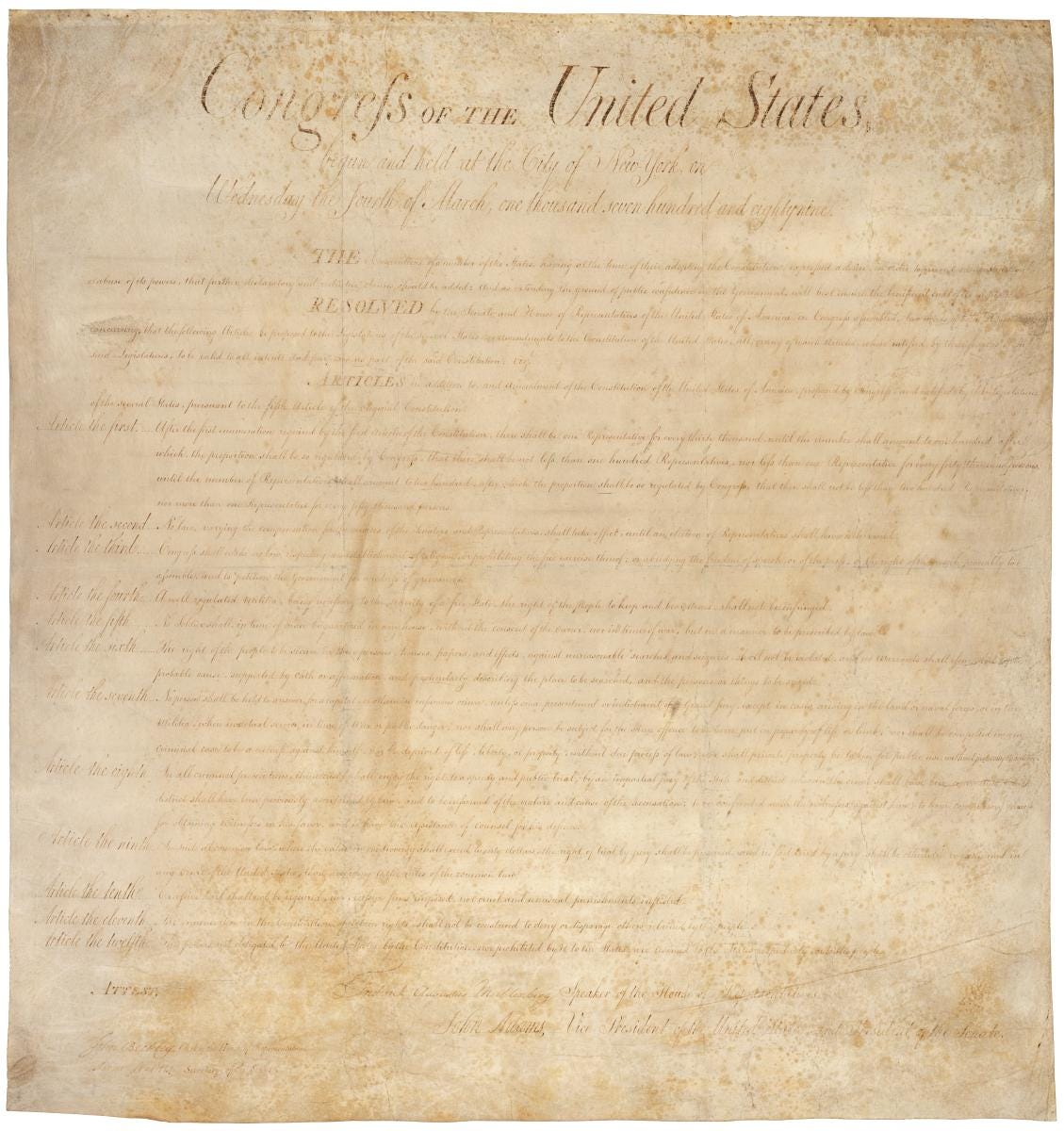
Governments are always jealous of the individual prerogative and seek to either nudge or shove it in the desired direction, whether through policy choices or outright coercion. They would like nothing more than to be able to restrain the natural rights of individuals – self-defense included – to better fit the government’s preferred outcome for the whole of society, regardless of individual wishes or dissents. The fact that America’s founders chose to put certain restrictions on the federal government (later correctly applied to the states) in defense of these individual rights is unique in human history. Never before had a polity been organized around the rights of the person against government; in fact, this was an inversion of the historical norm, where governments often organized around defending their own privileges against the people writ large. The First Amendment has confounded political elites for centuries, often constraining their policies and allowing wide latitude to individuals for speech, especially disfavored or inflammatory speech. These protections are, in the words of the iconic American writer Mark Twain, “unspeakably precious things.” Our courts have been up and down on this issue over our history, but in the past 70 years, the jurisprudence has consistently moved in favor of speech. This is, unfortunately, at odds with much of the rest of the West, including nations like Britain and France that share much of our Enlightenment cultural inheritance.
The trend in Europe has been strongly against speech. In distinct contravention of the robust political and social debates of the past, our friends across the Atlantic have increasingly constrained the public square and gone so far as to criminalize basic rhetoric. They are able to do this because their polities do not have the written constitutional protections and checks and balances in favor of individual rights that we do. Their governments, often by bare majorities or pluralities, are able to make enormous changes to the social compact and enact punitive restrictions on disfavored activities. There are myriad examples of this government overreach, including de facto blasphemy laws targeting people who say inflammatory things about Islam in particular. In the UK, there are so-called non-crime hate incidents, where less-than-progressive social media posts about controversial issues like immigration or transgenderism are met with police knocking on your door. There have been criminal convictions for online posts that, in the American context, would be laughed out of court. And in one recent story, an assault victim was convicted of a hate speech offense for calling her attacker an anti-gay slur in a private text message. The kicker? Nobody was prosecuted for the actual physical assault. The importance of our First Amendment is all the more evident when issues like this arise in a nation that was one of the main progenitors of the Enlightenment notion of free speech.
As crucial as written legal protections for speech are, they are not the only necessary factor to have a society that allows the full flourishing of this natural right. Just as vital is a culture that values free expression. The fact that the government cannot punish you for speech is wonderful, but no society should prohibit other people who dislike your speech from punishing you socially either. That in itself would, paradoxically, violate the idea of individual conscience protections. Therefore, it becomes necessary for societies like ours to form cultural norms around acceptable discourse and the reactions thereto. The best version of those norms is broad and widely applied. There should be expansive latitude for speech, including inflammatory speech or minority views, but similar latitude for people to choose not to associate with or support that speech. Dispute is part of the fabric of a speech-centric culture and having those outward expressions, even of noxious ideas, allows for that public dissent and attack. Compulsion, not disagreement, is the problem, and it is a hard one to shake. There is a natural desire to suppress things you dislike, so creating cultural norms that avoid that outcome is an uphill battle. Still, this has historically been a strong part of the American cultural paradigm, buttressing our legal protections. Now, however, we must work at maintaining our heritage and bringing it forward into a new era.
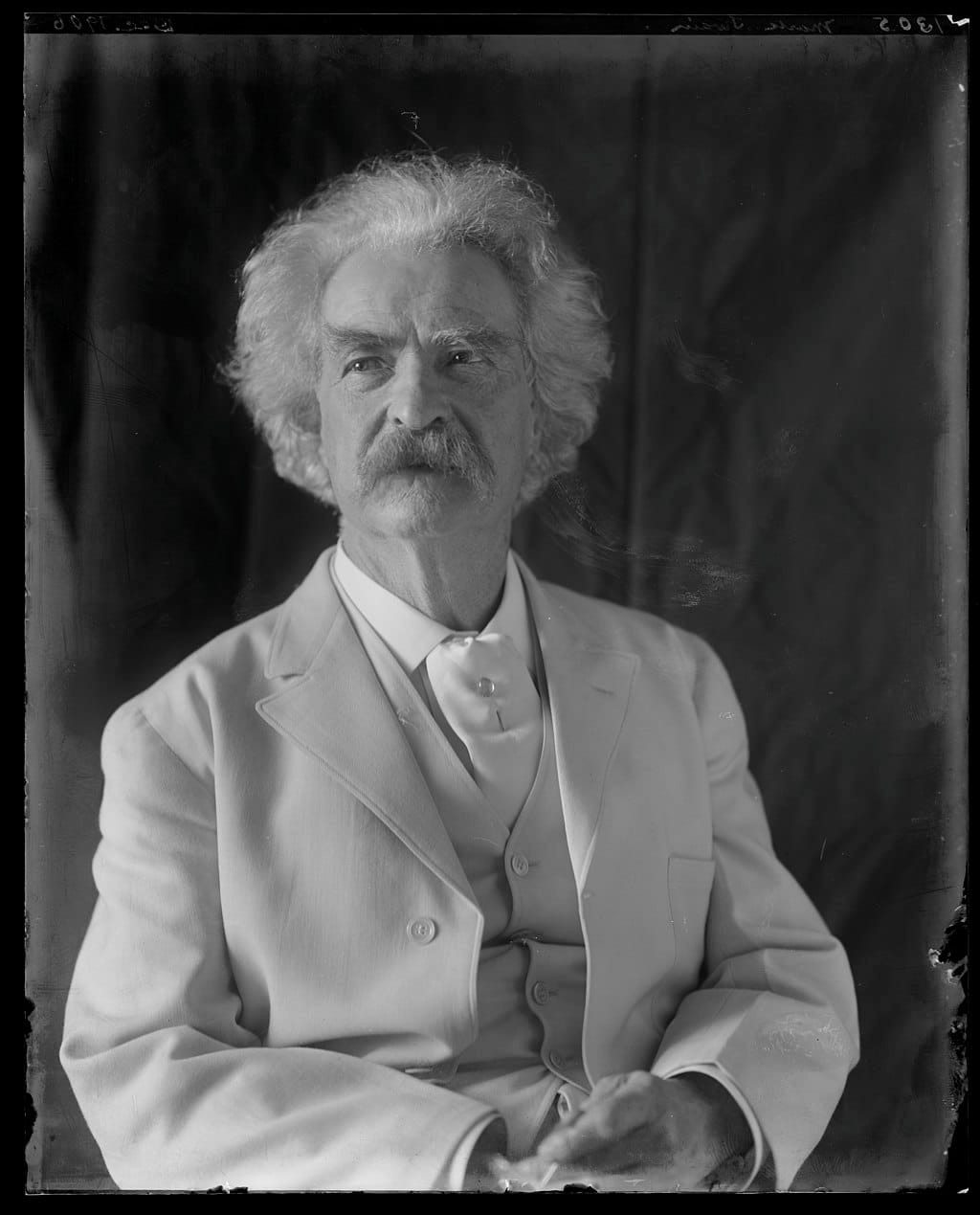
There are some threats to free speech today, but they are almost entirely cultural in nature and they are, frankly, somewhat overblown. To reference Twain yet again, the death of free speech has been greatly exaggerated. Factions on both sides of the political aisle, geared more toward younger generations, are skeptical of robust speech protections. Some abhor the espousal of so-called ‘hate speech’, while others want suppression of things like flag burning. Both are basically seeking to create the conditions for permanent cultural victory by legally anathematizing their opponents. There are, however, no such permanent triumphs. Much of this societal fever, exemplified by the moral panics of the pandemic era, seems to be breaking. Thankfully, most Americans still prefer a robust culture of political difference and espousal of all kinds of variegated ideas – within some basic limits, like avoiding advocacy for slavery, Nazism, pedophilia, and murder. This is a very good thing. It is also a good thing that our ‘banned books’ lists include bestsellers that are widely available at bookstores, in libraries, and on the internet. The fact that we decide to label written works that are criticized, removed from school curricula, or age-restricted ‘banned’ just shows that we don’t actually have a problem with book banning.
In the political and legal arena, things are similarly positive. The Supreme Court remains a powerful defender of speech rights, expanding the ability for individuals to avoid compelled speech or act in accordance with their own consciences. Malicious prosecutions for speech are essentially non-existent and when they do happen – here’s looking at you, State of Colorado vs. Jack Phillips – they are generally thrown out by the highest court in the land with extreme prejudice. The federal government, despite its best efforts under administrations both Democrat and Republican, has been unable to stifle free speech in any really meaningful way over the past decade. Because of our constitutional order, those efforts are primarily carried out via intimidation and veiled threats, not direct prosecutions, but even those end up failing. Social media accounts targeted for censorship by the Biden administration for promoting Covid ‘misinformation’ were either not banned or have been reinstated. Networks and pundits rhetorically attacked by President Trump have remained on the air and able to criticize government policy. The fact that people can freely call the government fascistic or authoritarian without legal consequence disproves the whole idea – something for which we should all be grateful.
Our country is truly exceptional, for both good and ill. Yet I would certainly categorize us as being far more in the good column than the alternative. When it comes to protections for the natural rights of individuals to think, believe, and express themselves freely, we are absolutely unmatched. No other nation in world history has approached our country’s dedication to restricting the government in favor of the individual person. No other polity has explicitly and durably protected freedom of conscience and expression like we have. Speech is foundational not only to America, but to our entire existence as human beings. Without it, we cease to be the unique species that we are. We lose something of our very reason for being. That is why protecting and defending that innate human right is so profoundly important. Nowhere is better at doing that than the United States of America. And that is something I will be eternally thankful for.
Enjoy your time with family and friends. Remember to be grateful for all that we have in this glorious country of ours. Have a wonderful Thanksgiving and God bless America.
One of the things I really like about America is its free speech, Like many things about America, where America is unique, they get a lot of criticism about it, because they are the only ones to do that,But ultimately if America just follow what Europe did for example, America would stop being America and what would be the fun in that?
I like how every country in the world works differently from one another, what would be the point of America existing if it didn't have Guns or the A1, if America abandoned those things it might as well be part of the UK.
Even if many people use that free speech for "bad things" like Racism, Antisemitism among other things I would still argue that's ultimately a good thing. Because they are being honest even if in an evil way, in a society without free speech those people wouldn't stop being Racist or homophobic, they would just be that way in silence
Which in my opinion is way worse.