

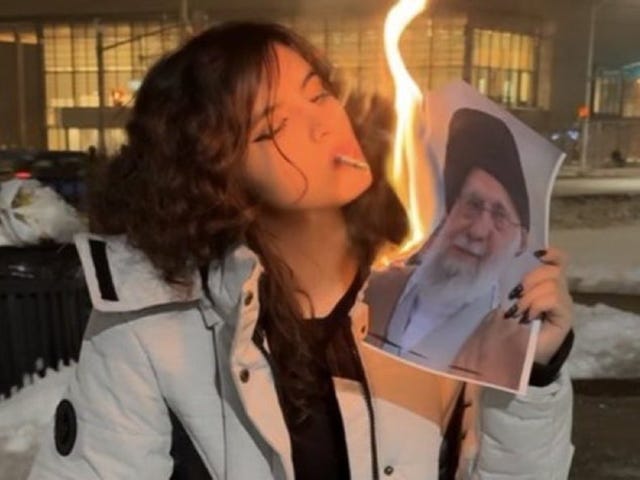
History is once again in the making in Persia. The land of the shahs, the eternal Zoroastrian flame, and famed kings like Cyrus, Xerxes, and Darius has rarely left the historical spotlight – sometimes for its glorious successes and other times for its incomprehensible and humiliating failures. But this beautiful and proud country certainly knows how to make an impact. Unfortunately for the Iranian people and the world, the global impact that the nation has made in the past 50 years has been unremittingly bad. Since the Islamic revolution in 1979, the ruling mullahcracy has turned the country from a decent, if troubled, member of the international community into a pariah state whose primary exports are antisemitism, anti-Americanism, terrorism, and radical Islam. Americans, Israelis, Arabs, and, yes, Iranians have long suffered because of the mullahcracy’s evil ideology and violent actions. Finally, however, the ayatollahs’ reign of terror may be coming to a blessed and much-deserved end.
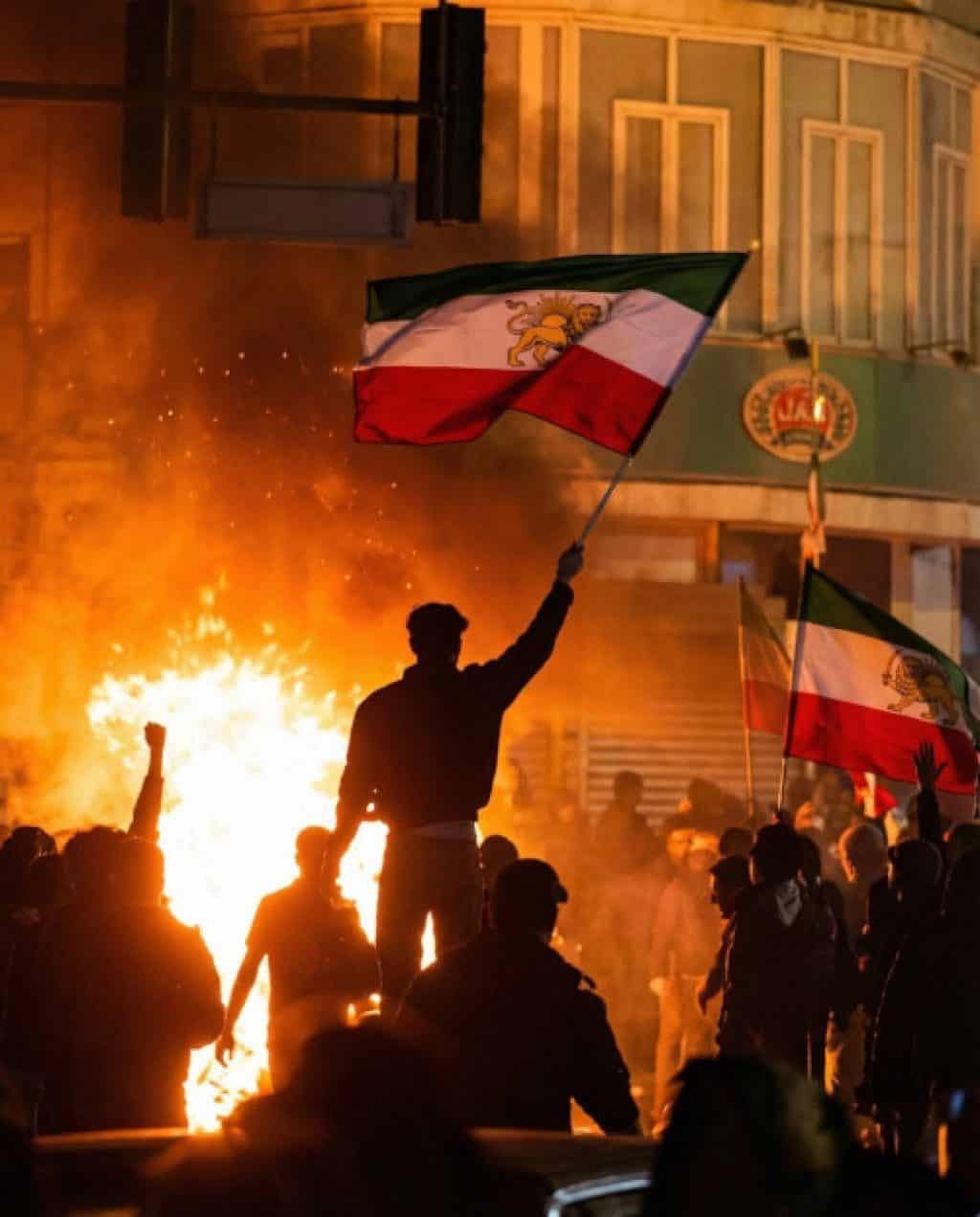
Over the past two weeks, protests have roiled the Islamic Republic, starting small, but rapidly spreading across the whole country, gaining masses of adherents along the way. Now, they have reached every noteworthy town and city in Iran, drawing in millions and leading to mass anti-regime action including arson, vandalism, and assassinations. Statues of regime icons like Ayatollah Khomeini and Qassem Soleimani are being torn down by demonstrators hoisting aloft the pre-1979 Iranian flag and chanting for the return of the Shah. These are, by a long shot, the most serious anti-regime protests in recent Iranian history, going back to the early 21st century. They build on the 2022 ‘Woman, Life, Freedom’ demonstrations, sparked by the extrajudicial murder of a woman by regime thugs for the ‘crime’ of insufficient head covering. But they have eclipsed those powerful protests, as well as those stemming from a stolen election in 2009, by a substantial margin.
These demonstrations are multifaceted. They attack the regime’s expensive promotion of regional terrorism and pursuit of nuclear weapons over the welfare of their own people, its economic mismanagement leading to rising costs and job loss, the repression inherent in the mullahcracy’s ideology, and its repeated failures in basic governance, culminating in a major water shortage. The regime itself is the weakest it has been at any point in the past 30 years, suffering near-constant defeat across multiple fronts since October 8, 2023. Over the course of twelve days last June, Israel dominated Iran thoroughly: gaining complete air superiority over the country, activating clandestine agents and assets based there for over a decade, killing regime leaders with total impunity, and shooting down an impressive percentage of Iran’s retaliatory missiles and drones. The capstone was Operation Midnight Hammer, America’s utter devastation of Iran’s military crown jewel, its nuclear weapons program. These were not only staggering setbacks; they were a humiliation. The world saw this and geopolitics has changed to account for it. And the Iranian people saw it, too.
They no longer seem afraid of the regime’s violent repression. They no longer seem cowed by the use of lethal force from the Basij militia or Islamic Revolutionary Guard Corps (IRGC). They no longer seem willing to disperse when confronted. They no longer seem content to confine their demands and now seek the overthrow of the regime. In short, they are ready, willing, and able to act to reclaim their great nation from the hands of the evil despotism that has ruled them for 47 years. This may finally be the time when the mullahcracy falls. But it may not be. Despite the tailwinds in favor of these righteous and courageous protests, they face significant headwinds pushing them back. Four in particular are worth analyzing, as they may be the factors that make or break this incipient revolution.
I. Regime-Imposed Communications Blackout
The first challenge that the protesters must overcome is the total communications blackout that the regime has imposed in a desperate attempt to shut down internal communications and any ability to reach the outside world. The mullahcracy is a totalitarian government, exercising immense control over all aspects of society; the internet is no exception. This is a tried-and-true authoritarian tactic, intended to isolate pockets of resistance, eliminate the possibility of outside support, and crush the opposition in an easier, piecemeal fashion. It also is useful in limiting the publicization of incriminating videos, photos, and other media for wider global dissemination. If the regime can limit the international knowledge of its brutal repression, it has a far greater chance of succeeding in preserving itself. As of this writing, the regime has gone door to door confiscating satellite dishes and other technology that could be used to get around this blackout, spending precious enforcement power on ensuring that informational control remains in the hands of the government. Without overcoming this forced isolation, the rebellion will likely fail.
But this is not an insurmountable problem. There are still videos coming out of the country, albeit far fewer than before. The regime is confiscating satellite dishes because it knows that they can indeed be used to receive and send information. In the modern day, satellite communications are a gamechanger for those seeking to oppose authoritarian regimes. From sat-phones and GPS to full-scale internet platforms like Starlink, extraterrestrial means of contact enable the avoidance of government power over communications infrastructure. In cases like these protests, that becomes a critical lifeline. Starlink can be accessed via unofficial means, if the company allows it – and it seems like that is quickly becoming a reality. External foreign actors, like the US and Israel (more on them soon) could aid in disrupting the regime’s communications stranglehold by taking over its broadcast channels remotely or working covertly to surge satellite-capable tech into the hands of rebels. Neither would solve the problem, but each could help alleviate it.
II. Need for a Rallying Point
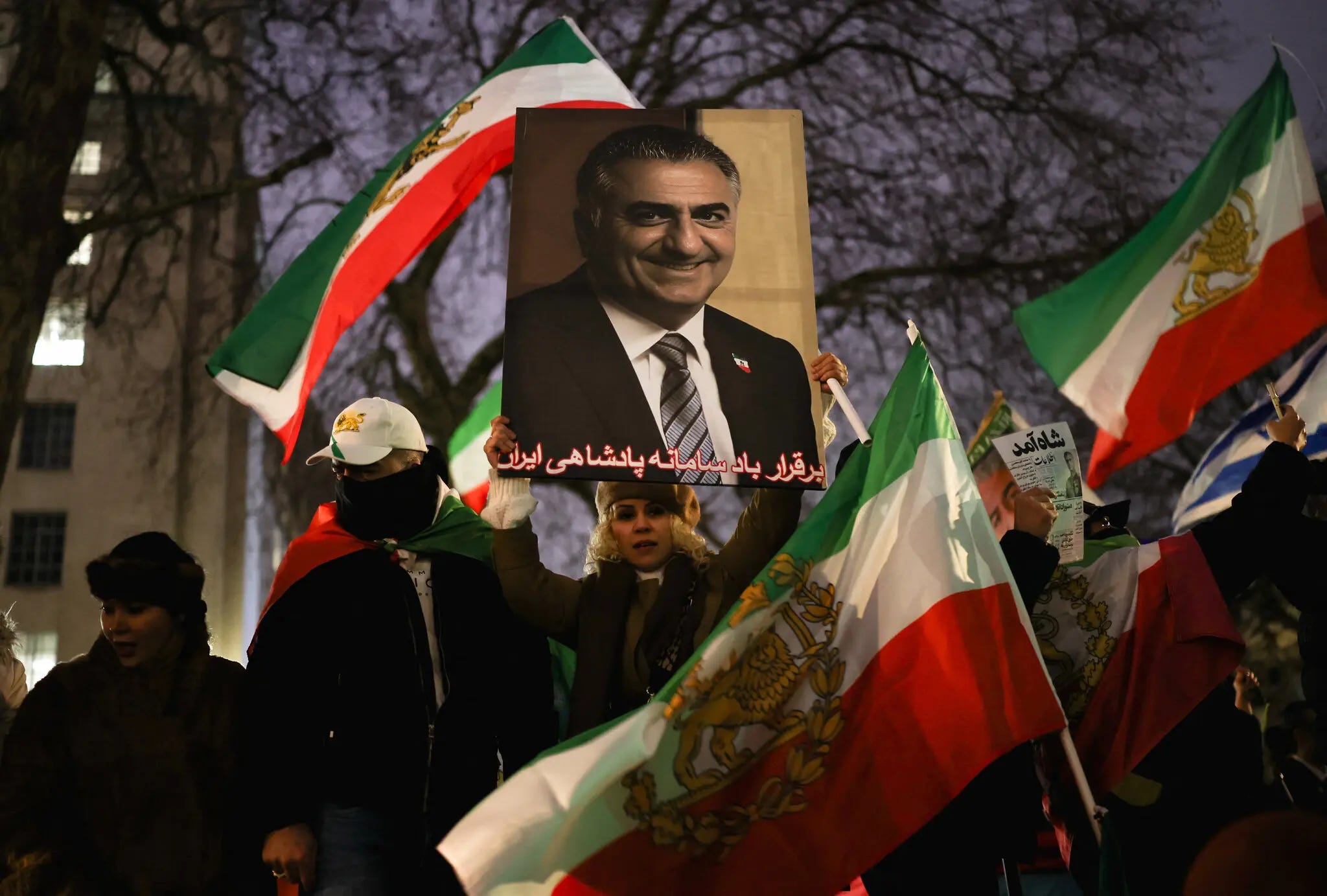
Oftentimes, popular revolutions fail when they want for leadership or a figurehead behind which they can rally. Demonstrations can be unorganized, lacking structure even if they are widespread and powerful. Collective action toward a specific goal is extraordinarily challenging, especially in an environment where a totalitarian government quashes all dissent. The more people you add to a leaderless movement, the less organized it becomes. Without organization, a regime as ruthless and aggressive as the mullahcracy has a significant advantage. The organized opposition to the government has largely been exiled from Iran itself, adding additional complexity given the communications blackout. It is also highly fractious, including advocates for a monarchical restoration, Islamic radicals that disagree with the current clerical regime, liberal democrats, and outright communists. The only real commonality between them is antipathy for the mullahcracy. That is all well and good, but revolts like this only succeed when there is a clear path forward that is embraced by both elites and the popular masses.
Given the constraints inherent in the unique Iranian situation, there really is one possible choice for a universally-recognized opposition figurehead: the son of the deposed Shah, Reza Pahlavi. This is a highly imperfect option, but it may be the only one available. Everyone in Iran knows about the Shah, even if only as a regime-sanctioned hate figure. At the time of the Islamic Revolution in 1979, Pahlavi the elder was widely despised and his regime seen as an oppressive, brittle relic of the past. Now, after nearly half a century of rule by the ayatollahs, Iran under the Shah looks positively rosy in comparison. Pahlavi has lived in exile in the US for decades and styles himself the leader of the opposition to the regime. Actualizing that claim is a more difficult task. He would need to return to the country, but would likely be unable to without American help or until protests reach a critical mass. He would have to explicitly disclaim his father’s authoritarianism and seek to sit at the head of a constitutional monarchy, both of which he would need to convince the Iranian people. Even with these hurdles overcome, the transition would be an extremely complex and fraught one, as the mullahcracy has warped the whole of Iranian society to its perverse totalitarian aims. Still, without such a figurehead as Pahlavi, there may not even be a chance at success.
III. Turning the Security Forces
In any uprising against an authoritarian regime, the key factor is always the reaction and response of security forces. Many of these regimes, obsessed with their own survival and uncaring about their own citizens, seek to simply kill their way out of a rebellion. This was the Soviet Union’s classic tactic, whether it was responding to the Hungarian Revolution in 1956 or the Prague Spring in 1968, and it pretty much always worked – until it didn’t. The difference between the successful quashing of uprisings in Hungary and Czechoslovakia and the failure to do so to preserve the regime in Moscow is twofold. First, the troops firing on brave Eastern European revolutionaries weren’t from those countries. Using foreign troops alleviates a major issue with internal repression: the moral and personal challenge of killing one’s own countrymen. Second, the Gorbachev government was not prepared to crack down against protesters in the same fashion as were his predecessors; this failure of willpower was, thankfully, a savior of the opposition and a deathblow to the regime. Right now, the Iranian regime really only faces one of those challenges, that of using Iranians to kill Iranians – the Ayatollah surely has no compunction, moral or otherwise, about murdering his citizens en masse. The weak point, then, must be the men in the security services themselves.
Iran’s government relies primarily on two internal forces for repression: the Islamic Revolutionary Guards Corps (IRGC) and the Basij. The IRGC is the defender of the Islamic Revolution and runs the foreign terrorism operations of the regime. It is ideologically invested in the continuation of the mullahcracy and controls significant sectors of the economy; in short, it is highly unlikely to refuse orders and stand down in the face of protests. The Basij, on the other hand, are domestic militias, often based locally and comprised of community members. This makes them no less brutal than the IRGC, but it may make them more influenceable. Not only are they subject to the same economic pressures and commodity shortages as their neighbors, they are less likely to be willing to murder them. If the Basij were to lay down their arms in meaningful numbers, the weapons could be used to arm the rebels and further threaten the regime by beginning to level the playing field militarily. Still, this is nowhere near a guarantee; upwards of 20,000 civilians have been estimated to have been killed already, showing that the paramilitary forces are currently willing to follow orders. Things may change in the coming days, but it would require a major shift in the regime’s internal legitimacy among the security services.
IV. Complications with External Support
One of the few things that could bring about that outcome and change the calculus for the regime’s thugs is if external intervention comes into play. The two powers most interested in and able to intervene are the United States and Israel. Both have already shown that they have the means, motivation, and ability to strike at the mullahcracy when needed. Last June, the two combined to decimate the Iranian military and destroy its nuclear program, with a barebones response from Tehran. Israeli intelligence in Iran is unmatched, American hardware is leaps and bounds better than the garbage that Iran fields, and the ability for Iran to retaliate is highly limited, especially if we take precautions and move our assets away from easily-targetable bases – something that has already begun to happen. There is a plethora of targets the US or Israel could strike, ranging from regime command and control infrastructure, to paramilitary barracks and bases, to serious strikes meant to decapitate the regime itself. All of these options are open, as are non-kinetic means of support. Those could include aid in overcoming the regime’s communications blackout, the ferrying of exiled opposition figures like Pahlavi to the Iranian borderlands, and the smuggling of weapons into Iran – an incredibly difficult task, but one that our covert forces likely could accomplish, if to a limited extent.
Without support from outside to frighten and degrade the security services, as well as boost the rebels themselves, this revolution may fail before it really gets off the ground. At the same time, accepting external aid is an incredibly fraught issue. Both Israel and America have been explicit enemies of the regime and key targets of regime propaganda since the Islamic Revolution in 1979. The Litte Satan and Great Satan, respectively, have been labeled as the hidden hand behind all of the mullahcracy’s failures for nigh-on 50 years. The regime is already calling these protests outgrowths of the Mossad and CIA, despite the facts of the matter. Any active, non-covert assistance would immediately hand the mullahs a talking point to use against the rebels, hoping to rally Iranians around the flag of the regime and against the two nations they’ve been attacking for decades. The calculus here is difficult: either accept help and lose some level of internal legitimacy or refuse it and get gunned down by the regime’s thugs. These brave protesters are stuck in something of a Catch-22, where they’re damned if they do and damned if they don’t. But I would imagine that most would gladly surrender some domestic respect in exchange for a chance to actually beat back the regime that has been repressing them for 50 years.
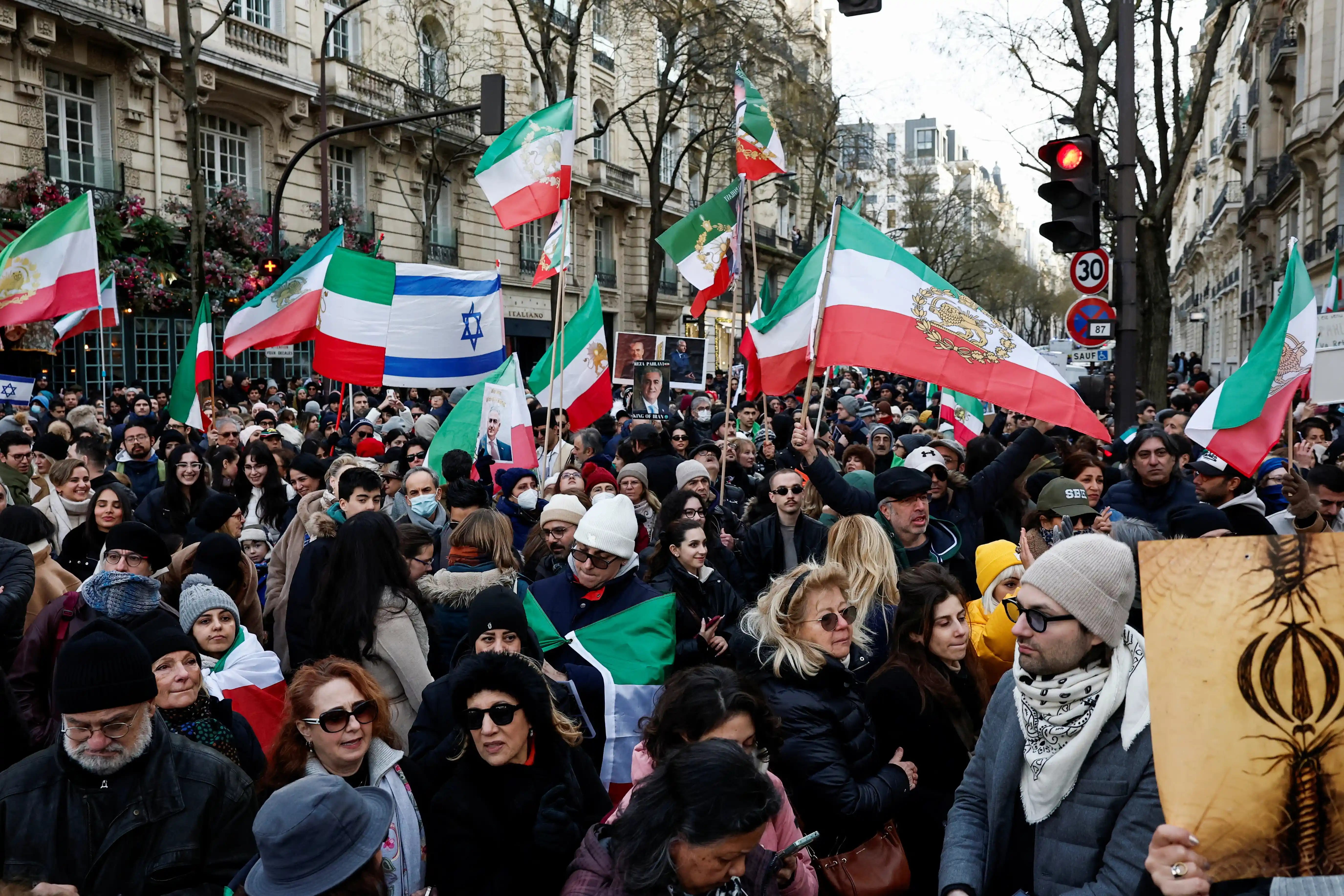
We do not yet know how this incipient revolution is going to play out. The possibilities are nearly endless, both for good and ill. The rebels have a great deal in their favor, from the genuinely staggering mass mobilization to the weakness of the mullahcracy. But they also face serious headwinds, like the four factors detailed above. Things could shake out any which way; it is just as likely to see the regime survive as it is to see the Shah restored, for instance. No matter what, though, the Islamic Republic will be further weakened by these protests, accelerating its seemingly-inevitable death spiral and reducing it even more as a regional threat capable of funding global terrorism and an aggressive nuclear weapons program. That is an undeniably good thing for the United States. What would be even better, though, would be if the courageous Iranian people succeeded in their aim of toppling their oppressors.
Godspeed to those valiant men and women. Pray for their success and the downfall of the most destabilizing and terroristic government on the planet. Let the Persian lion run rampant once again.