

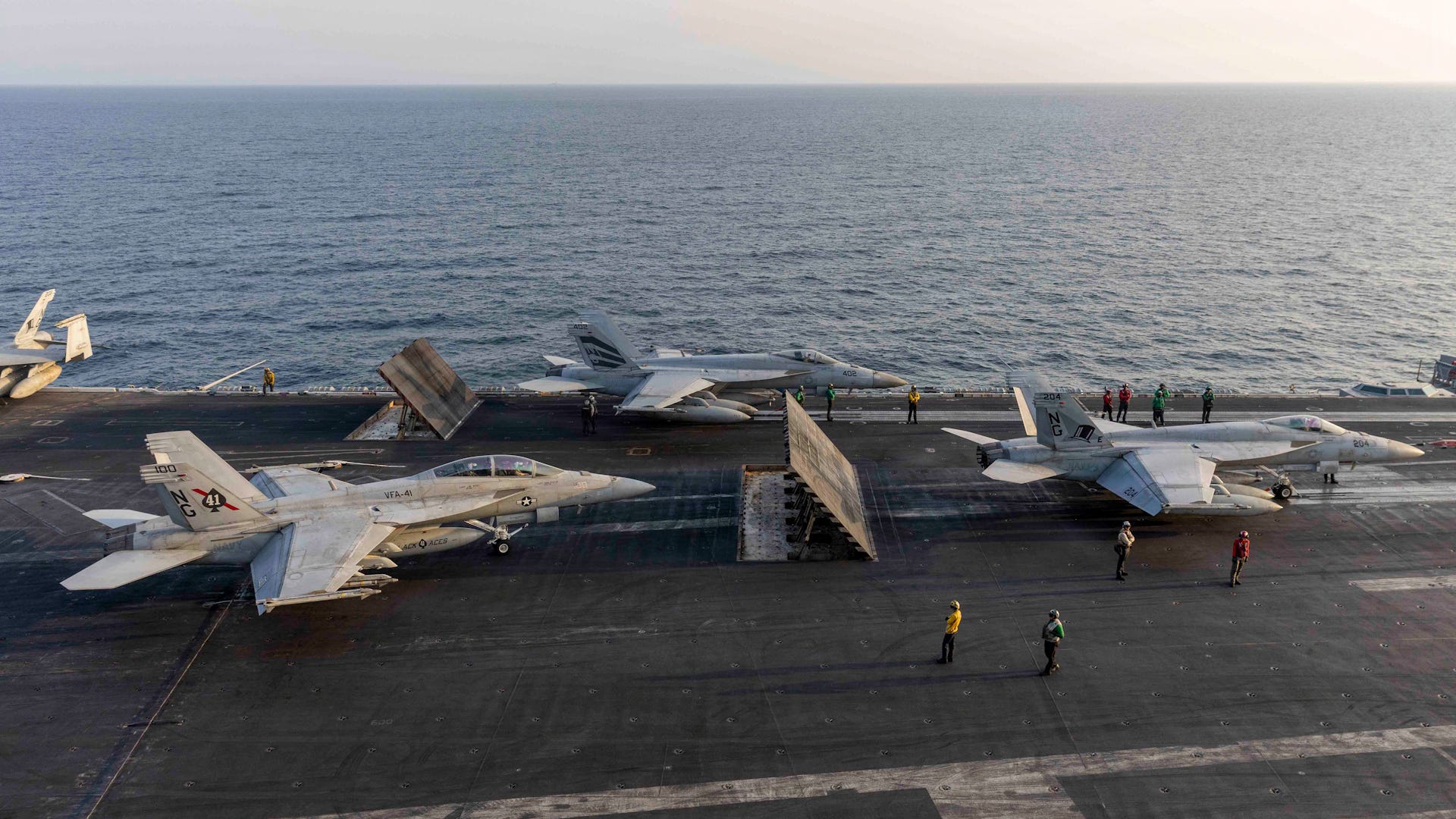
My latest piece for Providence Magazine lays out the case that the war against the Iranian regime is directly in American interests. First, I detail the false narratives that this war is imperialist, religiously-motivated, and on behalf of Israel before concretely debunking them. Then I explain exactly why the Iranian regime is a dangerous foe, how it has been attacking us since its genesis 47 years ago, and why defanging and ultimately defeating it is good for America. I’m biased, of course, but I don’t think there are many clearer articles describing why Iran is our foe, the threat it poses to Americans and our interests, and how our military operation is working successfully to address those threats. When this article is combined with my other writing on the topic, you get a broad picture of why we’re fighting this war and why it is necessary for the future of American security.
Below is an excerpt, but the whole essay can be read here.
The mullahocracy that currently runs Iran overthrew the Shah’s regime 47 years ago; they have been attacking America, our citizens, and our interests ever since. One of the first major acts of the then-new regime was taking dozens of Americans hostage at our embassy and holding them for 444 days. They have illegally interdicted neutral shipping in international sea lanes, going as far back as the 1980s, attacking oil tankers and shooting at U.S.-flagged vessels. The regime is the world’s largest state sponsor of terrorism, dispatching its Islamic Revolutionary Guard Corps (IRGC) across the region and wreaking havoc around the world. They have funded and supplied Hezbollah in Lebanon, the Houthis in Yemen, various Iraqi militias, and Hamas and Palestinian Islamic Jihad in the West Bank and Gaza. They have directed terrorist attacks on nearly every continent—including against American embassies. They were the architects of the 1982 Beirut barracks bombing that killed scores of U.S. troops. And they were the primary supplier of the IEDs that killed hundreds and maimed thousands of American soldiers in Iraq and Afghanistan. The Islamic Republic’s hands are drenched in the blood of Americans.
The mullahocracy has only accelerated its dangerous and destabilizing behavior in the past decade. The regime has been racing toward a nuclear weapon, only slowed by American sanctions, Israeli assassinations, and the joint U.S.-Israel attack on the program in June 2025. It ramped up its ballistic missile program, seeking to build an arsenal of short, medium, and long-range projectiles, essentially trying to replicate the North Korean playbook. Simultaneously, it has created a sizable suicide drone industry, using them against regional targets and proliferating them to its ally, Russia, for use against Ukraine. It used its proxy force in Yemen to forcibly shutter the Bab-el-Mandeb Strait via drone and missile attacks in late 2023, choking off global access to the Suez Canal via the Red Sea. It launched a multi-front war against Israel that began with the worst antisemitic pogrom since the Holocaust, one that resulted in dozens of American deaths and hostage-takings. It has planned assassinations on U.S. soil, ranging from the Iranian dissident Masih Alinejad to the current president of the United States. It is the world’s hub for sanctions evasion, aiding many of the world’s bad actors in lessening the sting of America’s powerful economic penalties.
Perhaps most importantly for America geopolitically, Tehran is a key player in the range of powers arrayed against America. Iran sells a great deal of oil to China at a discount, avoiding sanctions and cementing the bilateral relationship. China, in turn, sells Tehran weaponry that it uses to carry out its aggressive regional aims. One of Russia’s biggest supporters against Ukraine has been Iran. Until the defenestration of Nicolas Maduro, Tehran and Caracas were tightly aligned, especially on the sanctions evasion front. Iran cooperates militarily with North Korea, often buying Pyongyang’s nuclear weapon and ballistic missile technologies. And before the fall of the Assad regime in Syria, Iran was that dictator’s closest ally, helping kill hundreds of thousands of Syrians in the past decade alone. In short, Tehran is a key player in the alliance of authoritarian states seeking to overturn the U.S.-led world order.
Im 95% sure You are a Jew.
So do you think Trump is caught in an escalation trap? I legit don’t think the mullah type people are going to surrender. It’s about religion for them. Do you ever watch Triggernometry? Their episode “Our thoughts on the war” brings up very valid points.