

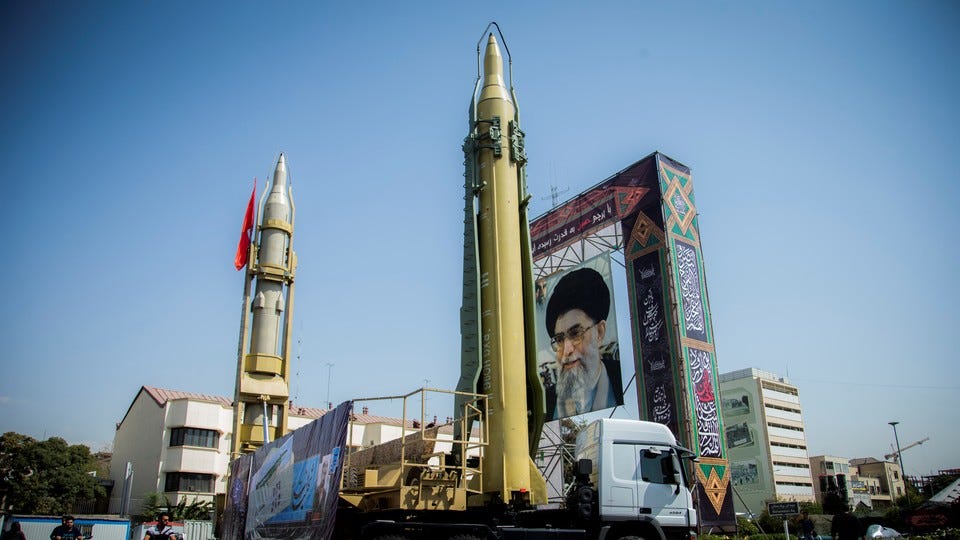
For decades, prominent hawkish figures have been warning of the serious threat posed by the Iranian regime to America, Israel, the broader Middle East, and the world writ large. For much of the 2000s, these conservative hawks cautioned American policymakers against the dangers stemming from the increasingly powerful and destabilizing mullahcracy. They wrote about Tehran’s budding nuclear program, its state sponsorship of regional and global terrorism, its ballistic missile program, the danger it posed to Israel and the Gulf states, and its belligerence toward shipping in the Strait of Hormuz. They spoke of its attempts to colonize other nations via proxy forces, as well as its intent to use those colonized nations as a means of gaining regional hegemony. And they described Iran’s inability to be stopped from these malign objectives by negotiation alone.
These arguments have appeared in the pages of important hawkish periodicals for decades. In Commentary, historian Arthur Herman explicitly laid out the Iranian threat to the Strait of Hormuz, pointing to Iranian military documents and war games over the waterway a full two decades ago. Legendary neoconservative stalwart Norman Podhoretz referenced Iran’s aspirations for regional hegemony, backed by nuclear weapons, in 2007. In the Weekly Standard in 2010, former Bush officials Michael Makovsky and Lawrence Goldstein discussed the need for alternative export pathways to the Strait to reduce Iranian influence – still a topic of discussion today. Academic articles, like one by Efraim Inbar in the journal Middle East Review of International Affairs in March 2006, detailed the Iranian ballistic missile menace against various US allies in the region, including the Gulf states. These messages were echoed at the highest levels of power in Washington during the Bush administration. UN Representative John Bolton, Vice President Dick Cheney, and even President Bush himself all decried Tehran’s attempts to go nuclear, presenting it as a broad peril to the US, Israel, and the Middle East as a whole, particularly when paired with Iran’s status as the world’s leading state sponsor of terror.
These warnings went largely unheeded at the time and were positively ignored once the Obama administration entered office and dramatically shifted our approach toward the region. Instead of a forward posture and the potential for military confrontation with the Iranian regime, we had “leading from behind” and conciliatory nuclear negotiations with Tehran. Hawks were strongly against these talks and their eventual outcome, the JCPOA. They argued that the deal was “catastrophic” for American interests and that the Obama team was taken advantage of by Iranian negotiators who crafted a deal in which they reaped all the benefits without verifiable costs.
These arguments were the crux of the hawk’s case against Iran, and they were lampooned for it. Over the past two months of war, however, that case has been vindicated by Iran’s own actions.
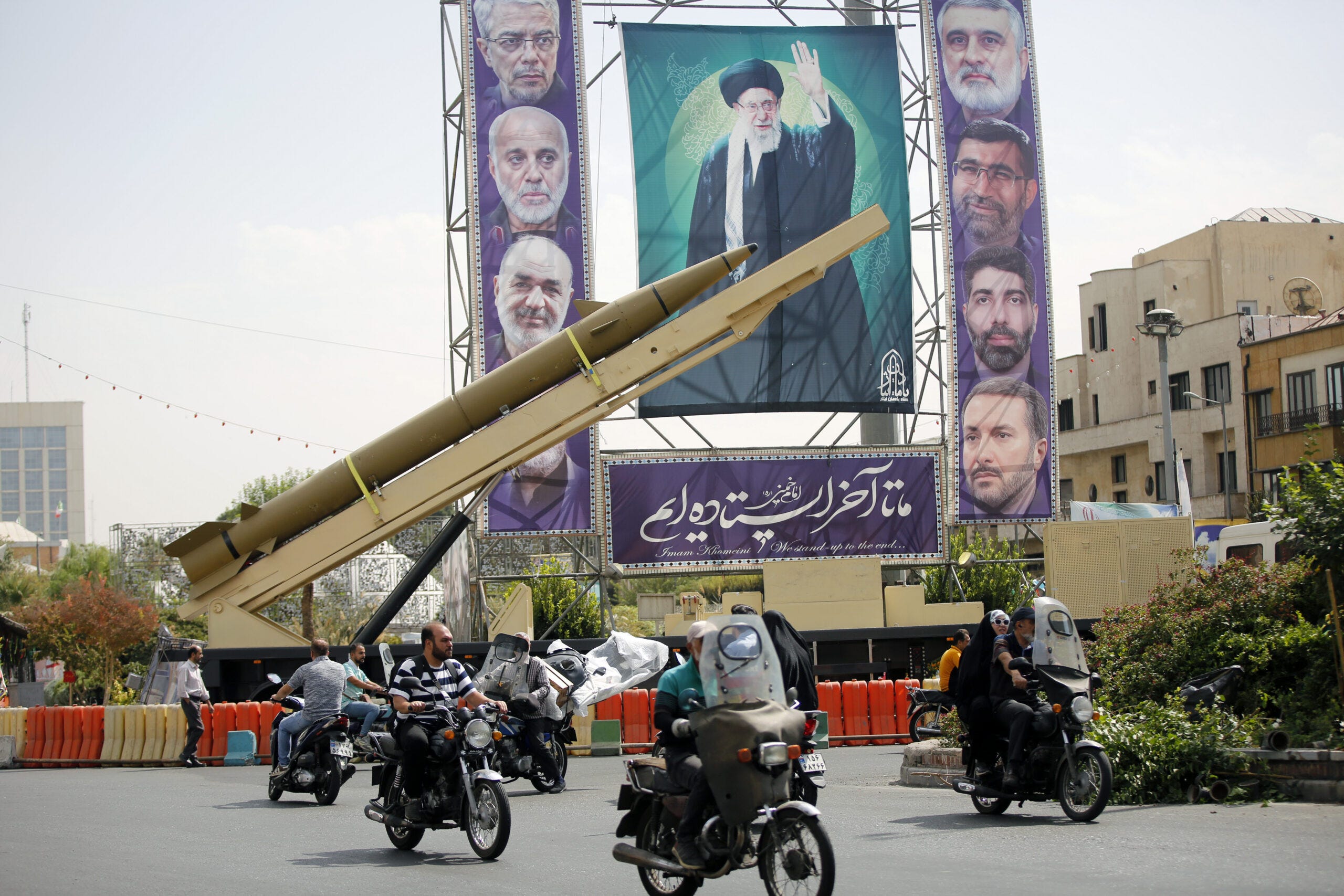
Since the joint US-Israeli strikes that started this round of conflict with Iran on February 28, Iran’s retaliatory actions have proven the threat that the hawks were warning about for decades, sometimes in eerily prescient fashion. Only Washington and Jerusalem have attacked Tehran, yet the bulk of the retaliation has been against regional non-belligerents. Iran has launched drones and missiles at the United Arab Emirates, Saudi Arabia, Kuwait, Bahrain, Qatar, Jordan, Iraq, Oman, Turkey, Azerbaijan, and Cyprus, with the total targeting these nations dwarfing those launched at Israel. The Iranians are not only targeting military bases. They have attacked oil refineries, ports, airports, city centers, skyscrapers, and pipelines. Even nations that have historically been either friendly or neutral toward Tehran have been targeted. This is the epitome of a regional threat, one that does not discriminate in its reckless belligerence.
The other major retaliatory action taken by the Islamic Republic has been to threaten commercial shipping in world’s most important energy chokepoint, the Strait of Hormuz. Nearly a quarter of the world’s seaborne oil trade and almost as much of the global LNG trade passes through this waterway. It has always been an international waterway free to transit and controlled by no single country. Now, Tehran has shuttered the strait and tried to force ships to enter its territorial waters to pay a toll. This is not merely an assault on the Gulf states that rely on oceangoing shipment for export, but an attack on the entire international system. Iran chose to take this action almost immediately – something that would be unsurprising had one read the early-2000s hawks. In fact, they laid this exact scenario out in detail. “The Islamic Republic has its hand on the throttle of the world’s economic engine: the stretch of ocean at the mouth of the Persian Gulf known as the Straits of Hormuz,” Arthur Herman wrote in 2006, before specifying a scenario that reads now like a daily news report. He also quoted from a leaked Iranian military document which called for “closing the Hormuz Straits through a combination of anti-ship missiles, coastal artillery, and submarine attacks,” demonstrating conclusively that Iranian tactics were always predictable.
Iran has clearly shown the world that it has been seeking a nuclear weapon, admitting in negotiations that it possesses enriched uranium and several sites at which to weaponize said material. It has likewise proven that it has longer-range ballistic missile capability than previously disclosed by trying to strike the US base on Diego Garcia, around 2,500 miles from Iranian soil. Both of these programs had been officially denied, yet they have shown themselves all too real. Iran’s government has also proven the hawks right when it comes to its attempt to control Lebanon via its proxy Hezbollah. Israel has been beating back Hezbollah for quite some time; now the group is seemingly weak enough for the previously-cowed Lebanese state to actively oppose it. Beirut has ejected Iran’s diplomats, sought to disarm Hezbollah, and has engaged in direct high-level negotiations with the Israelis for the first time in three decades – a process which the Iranians, despite their protestations, have been left out of entirely. Tehran has even gone so far as to threaten the temporary ceasefire if Lebanon was excluded, terms that neither America nor Israel agreed to. Iran’s behavior in negotiations has also proven the hawks prescient, as it has constantly shifted its demands, sought to include terms not agreed by the other parties, and repeatedly violated the agreements it chose to make. Iran is clearly not a good-faith negotiating partner, something its opponents have been correct about from the start.
Much has happened since the start of this war just over two months ago. But one thing has become clear above all else: the Iranian regime is a unique danger to America, Israel, the region, and the world. Its own actions have proven this beyond a reasonable doubt. Whether it is engaging in unprovoked attacks against its neighbors, illegally closing a critical international waterway, trying to control Lebanon via Hezbollah, or reneging on its own deals, the Islamic Republic has shown that it is a bad actor that must be constrained, if not destroyed. On that front, the hawks were absolutely right.
The hawks were telling us that Iran was perpetually weeks away from nuking us (or Israel).
So no, the hawks were not right.
The fact they they (the Iranians) were willing to commit this act of terrorism against the World economy is a reason to destroy this regime. Yet I have heard many say that the fact that they are willing and able to shut down the world economy cited as a reason they should be left alone.