

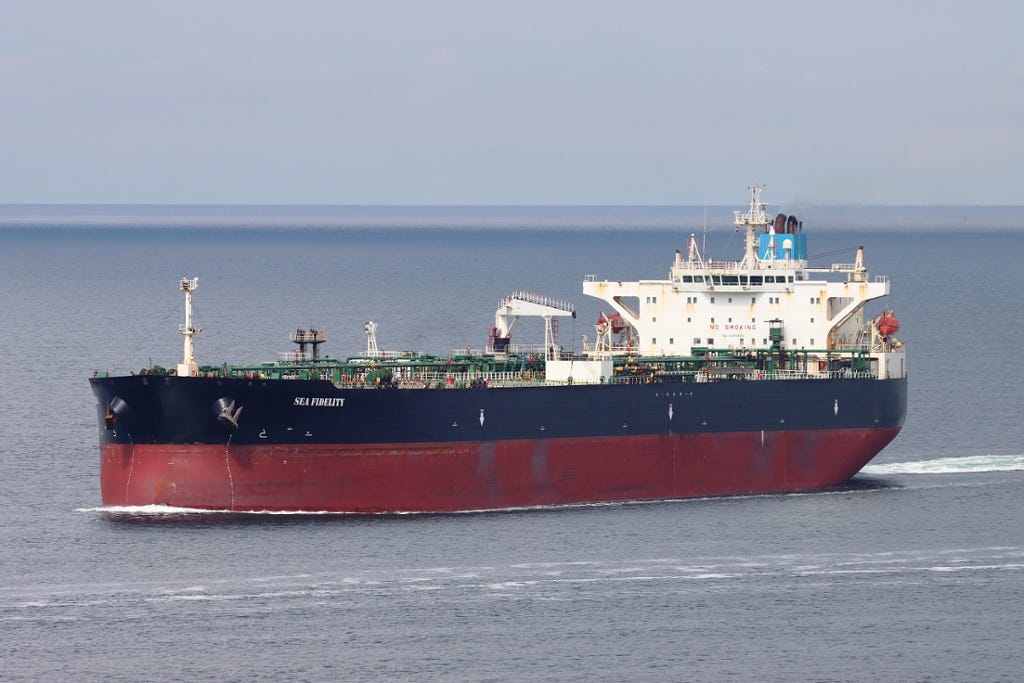
My latest piece over at Providence Magazine touches on a topic that is rapidly rising in salience: the problem of sanctions evasion via oceanic shipping. Our adversaries have denuded one of the critical tactics in our diplomatic toolbox, economic sanctions, of their immense power by working together to evade these penalties and flagrantly violate maritime law in the process. Our sanctions regime is only as good as we make it. Without the threat of real enforcement, it falls apart. So we should start enforcing it. America is the world’s premier maritime power with the ability to project that strength across the world to advance our interests. It’s time we start acting like it. It’s time we start seizing sanctions-violating ships.
Below is an excerpt, but you can read the whole thing here.
Over the past decade-plus, sanctions evasion has become a booming industry, closely binding America’s antagonists into a mutually beneficial network of economic intrigue and clandestine trade. The effectiveness of our punitive regime has steadily declined during that time, largely due to evasion attempts and our inability or unwillingness to crack down on them. There are myriad tactics used to get around these economic penalties and maintain trade. Some are complicated, while others, like trading directly across land borders—Russia, China, and North Korea come to mind here—are simple. Sanctioned products are secretly altered or transshipped via third countries to disguise their origin. Shadow shipping fleets, notably for oil, travel the world with their illicit cargoes, avoiding scrutiny and challenging ship trackers. Secondary financial systems have been erected, while cutouts and catspaws are ubiquitous. The complex web of interconnections between adversarial nations, unscrupulous profiteers, and amoral intermediaries can be difficult to untangle. But there are ways to cut the Gordian knot and deal severe damage to these enemy networks.
Our maritime prowess represents the strongest tool in our arsenal to enforce our sanctions regime. Global commerce travels primarily by sea, while transnational oil shipments, especially from nations like Venezuela, Russia, and Iran, usually reach their final destination via massive supertanker craft. The vessels engaging in this illicit trade are in violation of US law and many are themselves under sanctions by Washington. Non-sanctioned vessels involved in this network spoof their transponder location, fly false national flags, and violate generally-recognized maritime law and standards in a plethora of ways. This gives the United States a very good reason to interdict these ships and stop them from reaching their destinations with their cargo.