

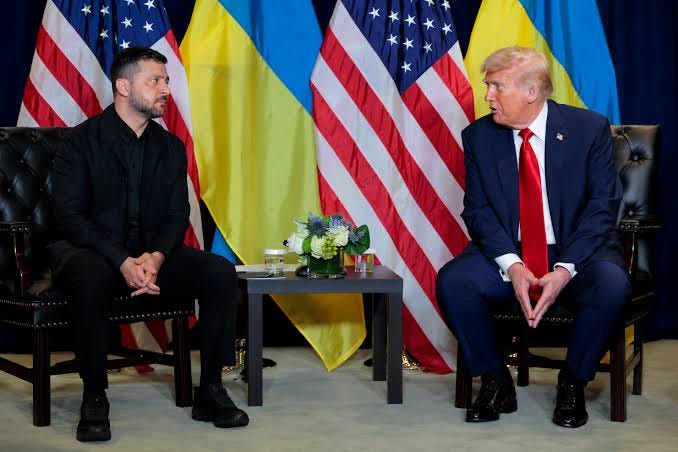
The last two weeks have seen a major turn in the Trump administration’s geopolitical outlook. No, we haven’t gone back to war against the Iranian regime – although that may be coming sooner than one might think. We haven’t changed our posture toward the defense of Taiwan, nor have we toppled the Cuban government, nor have we stopped slapping arbitrary tariffs on every slice of land from Toronto to Timbuktu. What the Trump administration has done, however, is turn against Ukraine in its righteous defensive war against Russian belligerence.
In just the past fortnight, Trump and several of his minions have gone after Ukraine as the issue in resolving this conflict, attacking Kyiv and Zelenskyy rhetorically and lambasting the Ukrainian cause as unjust, counter to US interests, or simply not our problem. During that time, Ukraine has seen a reduction in early warnings of missile strikes, the throttling or disabling of Starlink/Starshield satellite guidance systems, the waiving of bipartisan economic sanctions on Moscow, the delay or halting of Patriot missile transfers to Ukraine, the labeling of Vladimir Putin as a “humanitarian” by US envoy Steve Witkoff, the repeat claims that Ukrainian leader Volodymyr Zelenskyy needs to be replaced, and the assertion that Ukraine must stop attacking Russian energy infrastructure – a highly effective tactic – because it might hurt Trump in the midterms. Some of these actions remain shrouded in confusion as to their specifics – who pushed the Starlink slowdown and why, did early warning systems malfunction, are Patriot missiles needed elsewhere – but they all form an undeniable pattern of increasing hostility to the Ukrainian cause.
There have been moments of antagonism in the relationship between Washington and Kyiv before, notably the Oval Office blowup in February 2025, but rarely have they been this meaningful or public. Although some members of the administration are less hostile than others – and few are as hostile as Elon Musk seems to be – the overall picture is becoming clear. Calling this ‘switching sides’ is a bit too much, as we are acting in a nominally ‘neutral’ manner; the problem is that this switch to ostensible neutrality (often more favorable to Russia) necessarily means the cessation of the preexisting US support for Ukraine. Despite the badness of this choice, it certainly isn’t the work of a Russian asset, a claim that has once again come a-cropper in the online discourse. There are absolutely levers that Trump could pull that would harm Ukraine more gravely, yet he has demurred; a literal Russian asset would have no reason to do that, especially as a lame duck in the final stages of his second term. Could those more serious moves still be made? Sure, but jumping the gun is unhelpful and counterproductive.
Even though this situation could be worse, that does not mean that it is not bad right now. The anti-Ukraine decisions made by the Trump team in the past few weeks are, put together, a despicable act of cowardice and betrayal – not only of Ukraine, but of American interests. Let’s start with the ground truth here: Russia is our enemy. They are antagonistic to our interests, seek to dominate many of our allies, have attacked America both indirectly and directly, and partner with our other inveterate foes in a quest to overthrow the US-led world order that has secured our historic peace and prosperity. Russia has hacked our companies and governments, it has malignantly interfered with our politics, and it materially supports our gravest foes. Threatening America and attacking our interests have been the business of the Russian regime under Vladimir Putin for going on two decades now. Nothing has changed that and nothing is going to change that for the foreseeable future.
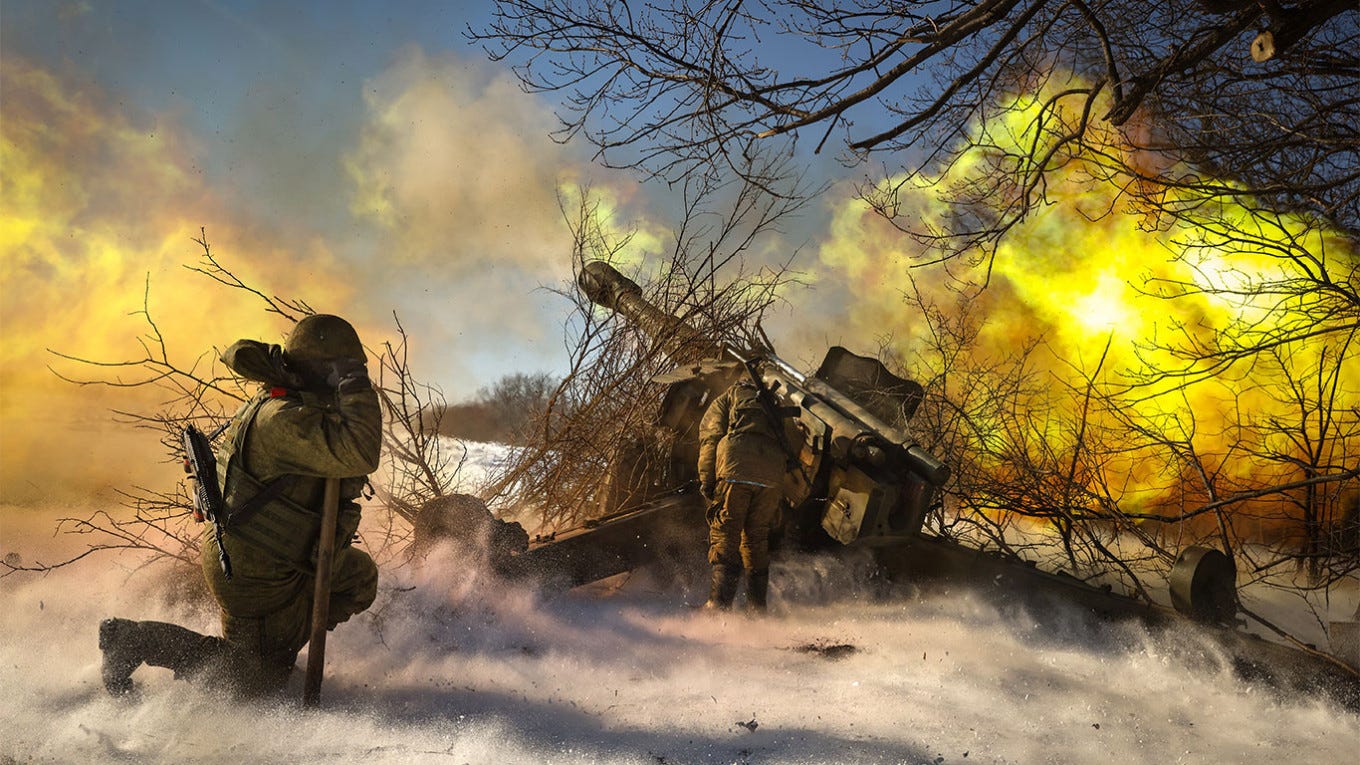
At the same time, we are stronger than Russia – by a massive margin. The late, great John McCain once called Russia no more than a gas station with nukes. In that, he was largely correct. Russia’s economy is very poor for its size and natural wealth, its standard of living is disastrously bad, it relies massively on exporting fossil fuels, and its politics is one of personal dictatorship. Its military and society are hopelessly corrupt, it cannot even execute the invasion of a much weaker neighboring country properly, and its naval might is practically nonexistent. It does, however, retain nuclear weapons (lots of them) and a large energy sector. Although Ukraine has even damaged those, destroying a segment of Moscow’s strategic bomber fleet and carrying out devastating assaults on Russian energy infrastructure. The idea that Russia can defeat us or should otherwise be worth pacifying is nonsense. It remains a threat, but one we should focus on deterring, not appeasing. We are the strong horse in this situation, and we are joined in it by European allies who, despite their manifest issues, are still in better shape than Russia. There is simply no need for conciliation on our part.
This is not a war we are fighting directly. It is a defensive war against naked Russian aggression that we are supporting with intelligence, logistics, materiel (through European partners), and diplomacy. We have no troops fighting on the front lines. We are not attacking Russia directly or indirectly. And through these efforts – imperfect though they have been – we have been successful in achieving what should be our aim: degrading the Russian threat, distracting it from expansion elsewhere, and aiding the Ukrainians in their righteous nationalist defense of hearth and home. For the money, material, and effort we have expended here, the return is spectacular. This is an example of getting immense bang for the buck in geopolitical terms.
When it comes to ending this conflict – one that has been raging for nearly 5 years unabated, was presaged by the 2014 Russian invasion, and has been flaring up on and off for a millennium – there will be no tidy solution. There is simply no negotiated agreement to solve the issues on the table that will either be acceptable to both sides or faithfully implemented by them. Russia’s war aims are total in nature. They seek to “de-Nazify” Ukraine, which is, given Russia’s cultural hyperfixation on its WWII victory (after being on the wrong side for years), an aim only satisfiable by the total elimination of the Ukrainian government and its wholesale replacement. They do not believe Ukraine is a country, nor a different people, and wish to end its existence as an independent sovereign nation-state. They want to destroy the Ukrainian language and culture, going so far as to forcibly kidnap and relocate Ukrainian children deep into Russia for ‘re-education’. On the contrary, Ukraine wants to continue to exist as an independent country, desires the end of the illegal Russian occupation of its territory, seeks security guarantees and closer partnership with Europe and the West, and wishes to live in peace within its own borders.
These are not things that can be rectified in a diplomatic settlement. They are mutually exclusive by their very nature. There is no mere gap to be bridged; it is a chasm. And one set of these demands is clearly immoral, evil, and wrong. Yet we are pretending at neutrality – realistically, a slide against Ukraine – in this conflict. Not because of a hard-nosed realist case on the basis of core American interests, but seemingly in a fit of pique over diesel prices before the midterm elections. This is, to put it mildly, complete idiocy.
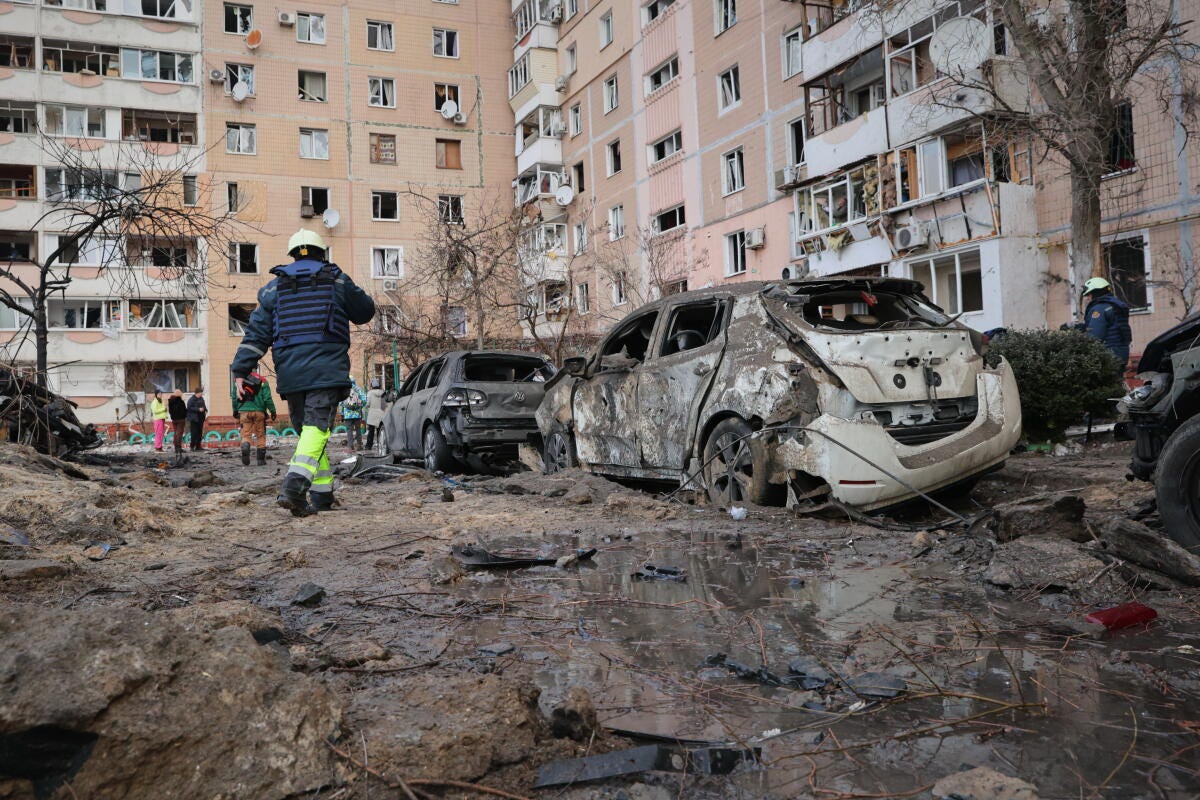
There are no real benefits we receive from this change, yet the costs are immeasurably immense. It tells our allies around the world not only that we are an unreliable partner when the going gets tough and political realities come to bite, but also that we are willing to use relatively underhanded means to undermine our former partners. It signals to our enemies that we are inconstant and will back down in the face of bellicose rhetoric, ephemeral promises of ‘business opportunities’, or intense flattery. It continues a trend of politically ping-ponging major aspects of our foreign policy in an age where our foes are increasingly aligned, assertive, and stalwart in their aims. This sort of thing will make American defense products seem untrustworthy, hurting our ability to export our wares and link our allies deeper into our security architecture. It is also, ironically enough, likely to cause more conflict than it will end. It runs counter to our global interests, gives a key foe a much-needed lifeline for no good reason, and seems completely arbitrary. An absolute shambles all around.
And yet people support this abhorrent choice. Many – hell, most – are not worth engaging. They spout Kremlin talking points, are invariably anti-American in the sense of despising American power, and usually erect various strawman arguments that they then commence to beat into oblivion. Others are merely Trump sycophants, who will follow along with and praise anything the president does. Yet more are on the political fringes, both right and left, who align more with Moscow than Washington. Some, however, are worth debating because their arguments contain a nugget of truth. These (often tacit) defenders of the president’s new approach use comparison to excuse him. To them, the Europeans – far closer at hand geographically, more directly threatened by Russian revanchism, and the biggest talkers on the issue – have behaved far worse, sending as much money to Moscow via energy purchase as they have to Ukraine in aid. Other, more hawkish, figures might argue that Biden was just as ineffective, constraining Ukrainian action against targets in Russia and promising big aid deliveries, but constantly delaying them over bogus fears of Russian escalation. These arguments each ring true; the EU and the Biden administration both have failed Ukraine despite their lofty rhetoric to the contrary. But two wrongs don’t make a right. And the bad actions of others do not excuse the bad actions of Donald Trump.
There is a silver lining to all of this, though. In spite of the contemptible reversal from the Trump administration, Ukraine will live to fight another day. Its future is not being made in Washington, nor will it be decided from Moscow. It is being created and defended every single day by the brave men and women of Ukraine, from Kyiv and Kharkiv to Odesa and Lviv, from the drone factories to the front lines, from doctors and nurses to soldiers and airmen. Ukraine has proven itself a nation, and a powerful and resilient one, at that. In that way, it has won this war already, showing Putin’s entire worldview vis a vis the country to be based on false premises. It will continue the fight, costly though it may be, because there is no alternative. This is truly existential.
Other nations see that, too. And they see how the fight for Ukrainian national existence against a revisionist Russia that seeks to craft a new Tsardom impacts them directly. So even if this Trump turn is a permanent one that lasts beyond this administration – something not widely supported by the American public – Kyiv will not be friendless. It will not even be isolated and without help if pro-Russia populist leaders take charge in nations like France and Germany. In fact, they will likely get even more assistance, from nations far closer to the front. The nations of Eastern Europe – Poland, the Baltics, Finland, Romania, and others – were under the Russian (Soviet) yoke within living memory; they do not wish to repeat that experience. They are already some of the most heavily armed and well-trained militaries on the continent; the Russian threat gives them all the more reason to double down on that approach. If they can keep Moscow at bay in Ukraine, they can preserve their own security while dealing a historic enemy a painful blow.
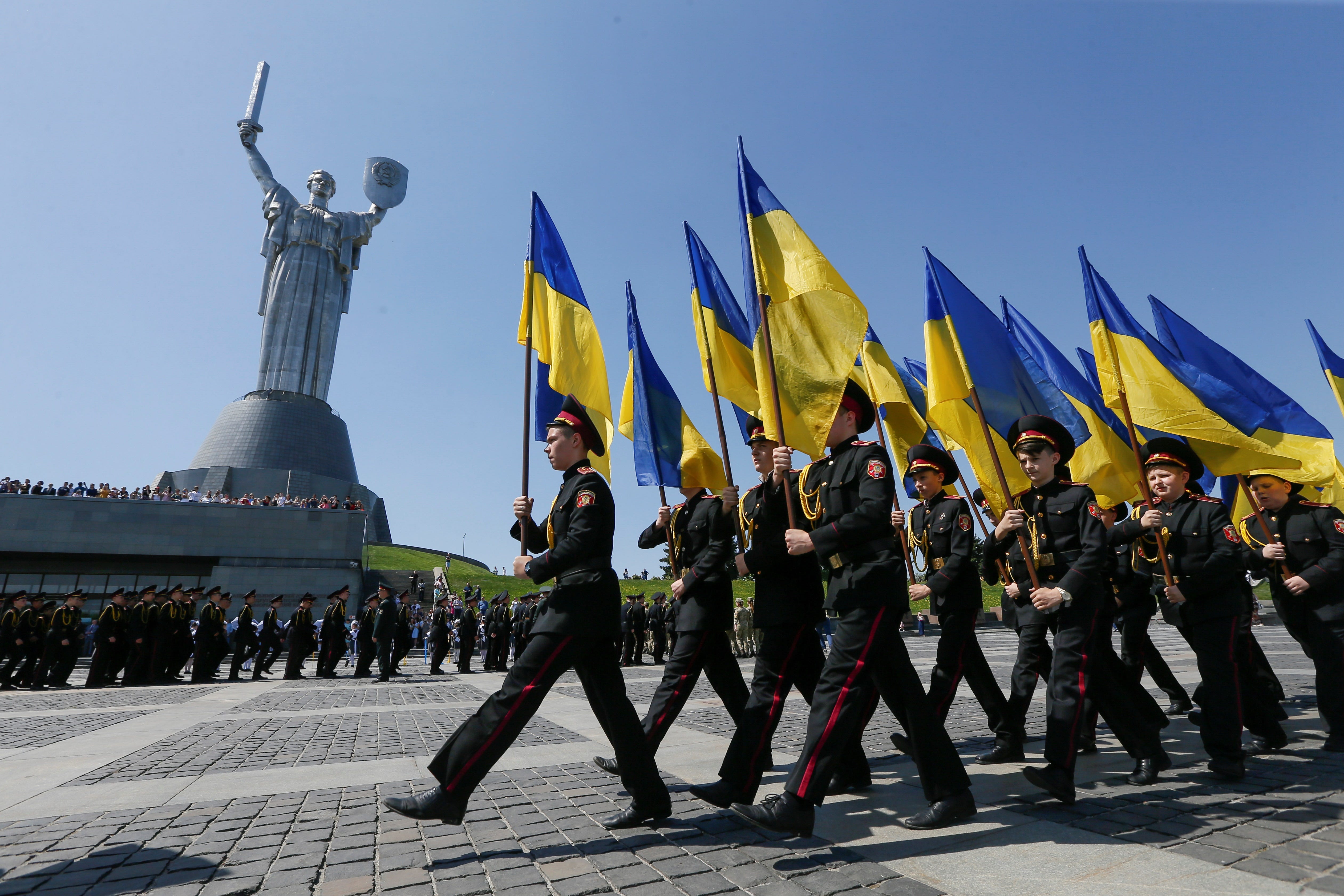
All is not lost. The Ukrainian nation is steadfast and strong. It has built one of the most impressive and technologically-capable militaries in the world, constantly innovating in the face of mortal danger. Its foe is larger and more resource-rich, but it is demotivated, degraded, and decrepit. It is stagnant, while Ukraine is dynamic. And it is ruled in a personal capacity by a septuagenarian paranoiac with undisclosed health problems and a megalomaniacal streak the size of the Volga – not exactly a recipe for stability and future-oriented growth. When the bastard in the Kremlin dies, Russia will be plunged into chaos (men like Putin don’t often do a great job of orderly succession planning). But Ukraine will remain ready. And when the opportunity presents itself, they will be there to seize it and reclaim what is rightfully theirs. One can only hope we are once again by their side when that glorious day comes.