

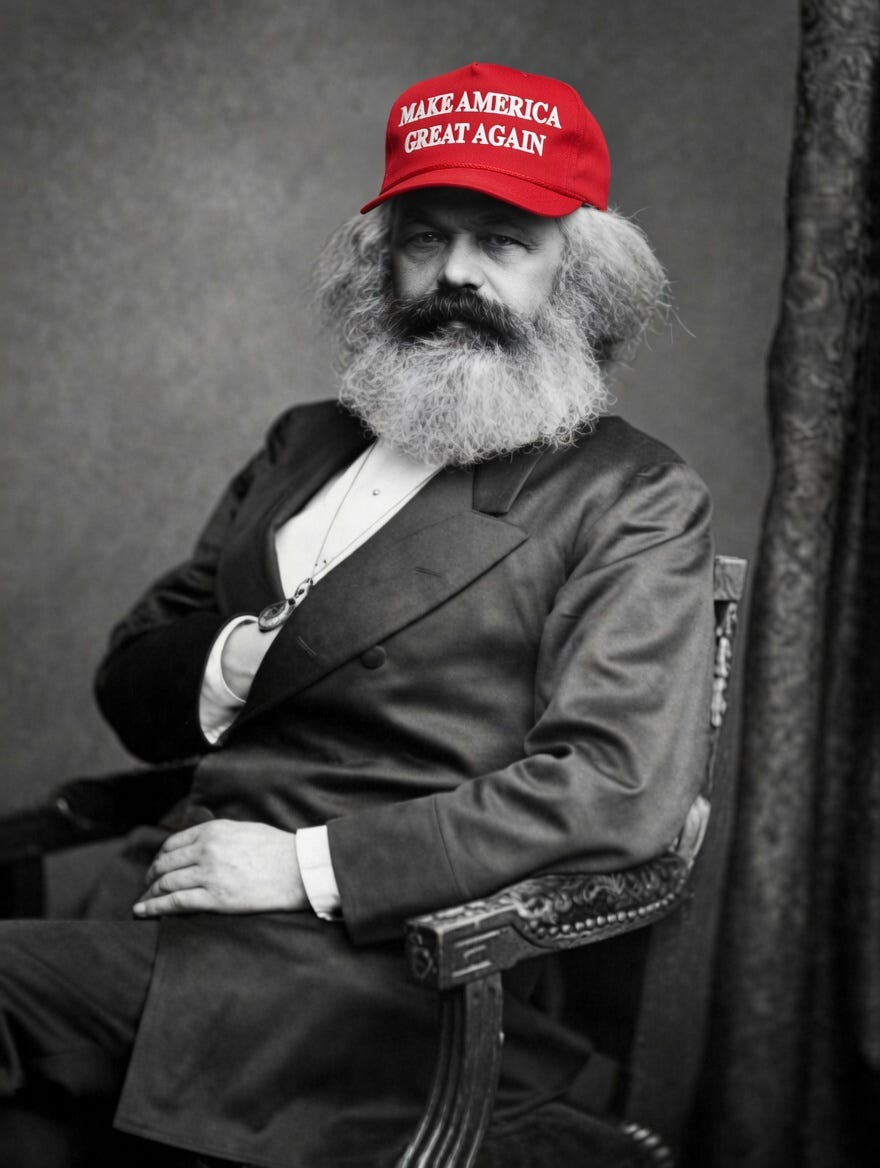
Since 2015, the Trump phenomenon has upended quite a great deal about the previously run-of-the-mill politics of the American right. In capturing the Republican Party and dominating it thoroughly over the course of a decade, the politics of the MAGA movement have become ascendant. Sometimes, those politics overlap with the previous instantiations of the American right. But oftentimes they do not. Nowhere is that more obvious than on economics.
Despite some continuity on tax cuts and deregulation, MAGA economic policy looks very little like that of the old guard conservative right.1 The ascendant New Right is populist, statist, pro-tariff, pro-union, anti-free trade, interventionist, hostile to Wall Street, and seemingly uninterested in the national debt. These positions either diverge from or are antithetical to the modern American conservative movement. They fly in the face of the iteration of the party that was considered the ‘establishment’ as recently as 10 years ago, the one that won thousands of elected offices over the course of and in opposition to the Obama administration. But the populist MAGA movement has almost entirely usurped that version of the Republican Party, replacing it with a more traditionally left-coded economic vision.
One of the (few) saving graces of Donald Trump is that he does not always buy into the ideology that his adherents try to craft around him. We have seen this most powerfully in his second term when it comes to foreign policy; many of his most fervent and vocal supporters – often heavily in the Vance camp – were part of the restrainer faction that wished to push American retrenchment, if not isolationism. Happily, Trump has bucked those folks decisively, notably with the ongoing Iran War. Unfortunately, when it comes to economic policy, the president is more aligned with the populist faction. And his administration has been putting those policy prescriptions into practice over the first year and change of his second term.
The most recent example of this MAGA leftism comes with the administration’s plan to bail out the failing Spirit Airlines. In the possible $500 million rescue package for the low-cost carrier, the federal government would have the potential to own upwards of 90% of the airline as it emerges from bankruptcy. Proponents of this bailout point to the aftereffects of the pandemic, the pointed refusal of the Biden administration to approve a proposed merger with JetBlue during a prior bankruptcy in 2024, and the recent increase in fuel costs due to the Iran War as good reasons to save Spirit. They also see a precedent to this plan in the auto industry bailouts during the 2008 Financial Crisis and the airline industry rescue during Covid. Besides the fact that many conservatives opposed those bailout schemes, this situation is nothing like the others. And the rationalizations that have been proffered for this intervention fall flat.
There is no systemic risk to the airline industry today. Spirit is going bankrupt yet again because of poor management and operations, not because of some broader issue that will drive other airlines into the same dire straits. If Spirit closes shop, the airline industry and consumers will not be much worse off. This is rescuing a company – one often considered the worst airline in the country – that has failed due to its own choices. That isn’t intervening on a sectoral scale, but an individual one. It is the epitome of picking winners and losers, and it comes with immense moral hazard. Why won’t other airlines or companies run themselves into the ground and expect a taxpayer bailout on the other end? If this is about saving jobs, plenty of American companies have more than Spirit’s 14,000 employees; what’s to stop them from following the Spirit playbook? Another bad argument is that this bailout must happen because the Biden administration failed to approve a merger that would have saved Spirit in 2024. But that does not make any logical sense from a conservative perspective. Just because a Democrat president did something bad, that does not mean that a Republican president should do something worse in response. And let me be perfectly clear: rescuing Spirit through a buyout plan is far worse than stupidly shelving a merger out of wrongheaded ideological predilections against corporate consolidation – predilections that many MAGA leftists share.
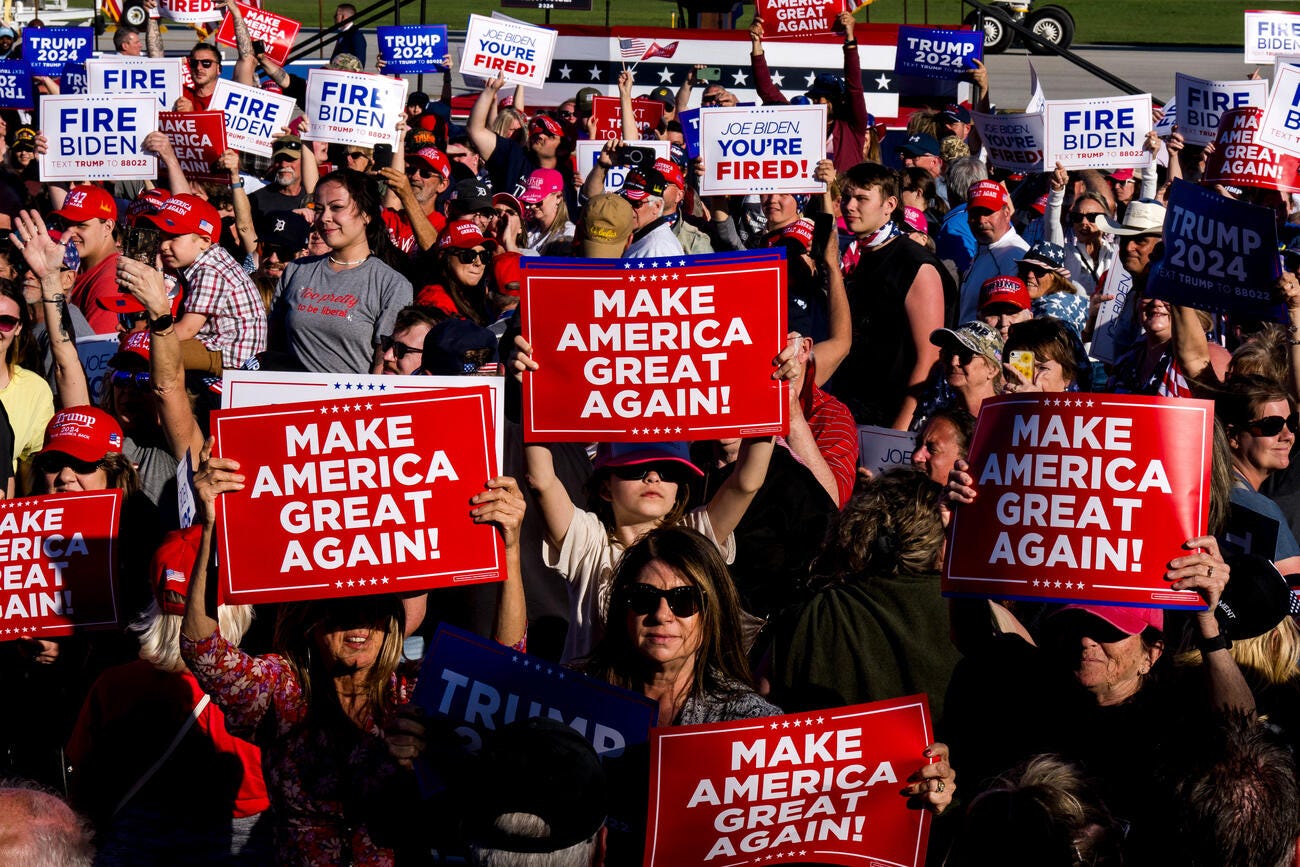
This sort of intervention into the market is nothing new for the second Trump administration. They have acquired shares for the federal government in a wide variety of companies covering vastly different sectors of the economy. They have acquired an equity stake in the semiconductor company Intel that amounts to nearly 10% of its ownership, worth almost $9 billion, ostensibly to boost domestic semiconductor manufacturing. They have partnered with the private nuclear company Westinghouse to build $80 billion worth of nuclear plants across the country, with the potential for 8% US ownership of the company if and when it goes public – something made far more likely with this massive infusion of capital from the federal coffers. Another major equity deal was made with the rare earths mining and processing company MP Materials, giving the Department of Defense 15% of the company in order to supercharge the creation of a purely domestic rare earths and magnet supply chain. Several other deals, often at least tangentially related to national security sectors, have been inked, totaling nearly $21 billion before the Spirit deal. This is undoubtedly the biggest spending spree on strategic corporate equities from the federal government since the Second World War.
But most of these legitimate objectives – increasing nuclear power construction, building a durable semiconductor supply chain, onshoring rare earths mining and magnet manufacturing, ensuring a steady supply of critical materials for the defense sector – could be accomplished without making the American government into a direct investor, with all the new interests that status creates. By investing in these companies directly, the federal government becomes interested in their profitability, their status vis a vis their rivals, the regulation of these companies in particular, their specific tax treatment, their position in lawsuits, and more. That only incentivizes favoritism and creates an enormous conflict of interest. Instead, the government could work to achieve those useful ends via different means. Those could include guaranteed purchase agreements, direct no- or low-interest federal loans, long-term contracts for construction of factories or processing capacity, favorable tax treatment, setting price floors for critical materials bought by the government itself, or public-private partnerships in specific projects. The Trump administration has used some of those tools, but the direct investment status undermines the broader independence that the federal government could maintain had it not pursued that path.
These direct investments in companies are not the only way that the Trump administration has aggressively inserted itself into the private sector in a manner that most resembles the traditional ideas of the left. The administration has mooted a cap on credit card interest rates, long a left-wing priority, as they claim that the rates are too high and are causing too much consumer debt. Besides the fact that this abrogates the classical conservative promotion of personal responsibility, it is also a terrible idea. Not only does it reduce consumer choice by disallowing credit card company innovation, it will likely lead to a massive reduction in the credit available to low-income households – these borrowers simply pose too much of a repayment risk to offer credit at such artificially low rates. Interest rates are not arbitrary constructs, but market prices of borrower risk. If we constrain that pricing mechanism, we will reduce the supply of credit to high-risk borrowers. That starts a vicious cycle that ends up harming the poorest among us and removing from them the opportunity to build credit and advance economically.
Similar price interference has come at the expense of pharmaceutical corporations, with the White House launching an executive order that essentially creates enforceable price targets on certain drugs, and one not limited to those medications the government itself pays for. If companies do not show “significant progress” toward achieving these targets, the order directs the Department of Health and Human Services to enact hard price controls, potentially revoke FDA approval for drugs, and use the Department of Justice to investigate pharma companies for antitrust violations or other anticompetitive practices. This is an extremely coercive use of federal power against private American businesses – some of the most innovative in the world, mind you – to force them to comply with a federally-set pricing scheme. It would reduce research and development of new drugs, incentivize investment elsewhere, give foreign copycats a leg up, and undermine an industry that has been one of the key drivers of modern American prosperity. This policy could have just as easily been promoted in a Kamala Harris administration, to the same ill effect.
Another left-wing policy embraced by the Trump administration and the broader MAGA movement it leads is an attempt to ban institutional investors from owning single-family homes as investment or rental properties in a larger real estate portfolio. The White House explains this policy as a means of creating more affordability for regular American homebuyers and paving the way for their realization of the American Dream of homeownership. But this will do nothing of the sort. Large institutional investors like Blackstone – a favored bogeyman of the left since the 2008 financial crisis – own a minuscule portion of the US single-family housing stock and a similarly-small portion of the single-family rental stock. They have reduced their inventory of housing meaningfully over the past few years, seeking to diversify out of the sector. They are really no competition for ordinary folks. And when they do invest in housing, they often promote rent-to-own schemes or new developments, both things that help deliver more housing to more people, usually the less well-off.
One of Trump’s earliest anti-conservative economic policies was his promise not to touch entitlement spending – the largest line items in the federal budget and the primary drivers of our national debt. He has been consistent about this since 2015 and the MAGA movement has followed him. His support for this spending, which has only grown over the past decade, was, in the classic leftist mold, a pure giveaway. Instead of promising gifts to poor voters, however, this giveaway was to older voters, many of whom traditionally lean Republican. Trump has shown no interest at all in tackling the looming entitlement crisis or even the ballooning national debt, incurring massive debt-driven expenditures over his two terms in office. For a party that spoke often about the debt and entitlement problem, the speed at which its voters – and many of its leaders – changed course entirely was both surprising and disappointing. The left was wrong about entitlements and the mortgaging of our shared future as a nation. The right shouldn’t have followed their lead, but Donald Trump brought them straight along that primrose path. We’re all going to be worse off for it.
Policies aren’t the only outlet for the president’s economic MAGA leftism; personnel surely matter, too. Historically, Trump has hired more traditionally conservative figures for his key economic advising positions – with the exception of his insane picks for trade positions, ones that fit his peculiar obsession with tariffs.2 But in this second term, he has added some true believers in MAGA leftism to the Cabinet.
The most notable appointment in this vein was former Labor Secretary Lori Chavez-DeRemer, previously a GOP representative in the House who partnered frequently with progressive politicians on economic issues. She was a favorite of organized labor, an institutional constituency that opposes the vast majority of conservative labor policies like Right to Work laws, the ending of public sector unions, and the broader push for pro-business and pro-growth policies. She was one of the few Republican co-sponsors of the PRO Act, a bill that attempted to make illegal various forms of freelance or independent work, stifling the freedom of Americans to contract as they please and eliminating a wide variety of new jobs like rideshare driving, independent delivery, and temporary online work – all in order to favor union labor. She has thankfully left the administration, but not due to her progressive policies; she was scandal-ridden, to boot. Her departure has not altered policy, nor was she the lone MAGA leftist in the Cabinet. Far more important in that regard is the man trying to become heir apparent to the Trump movement: Vice President JD Vance.
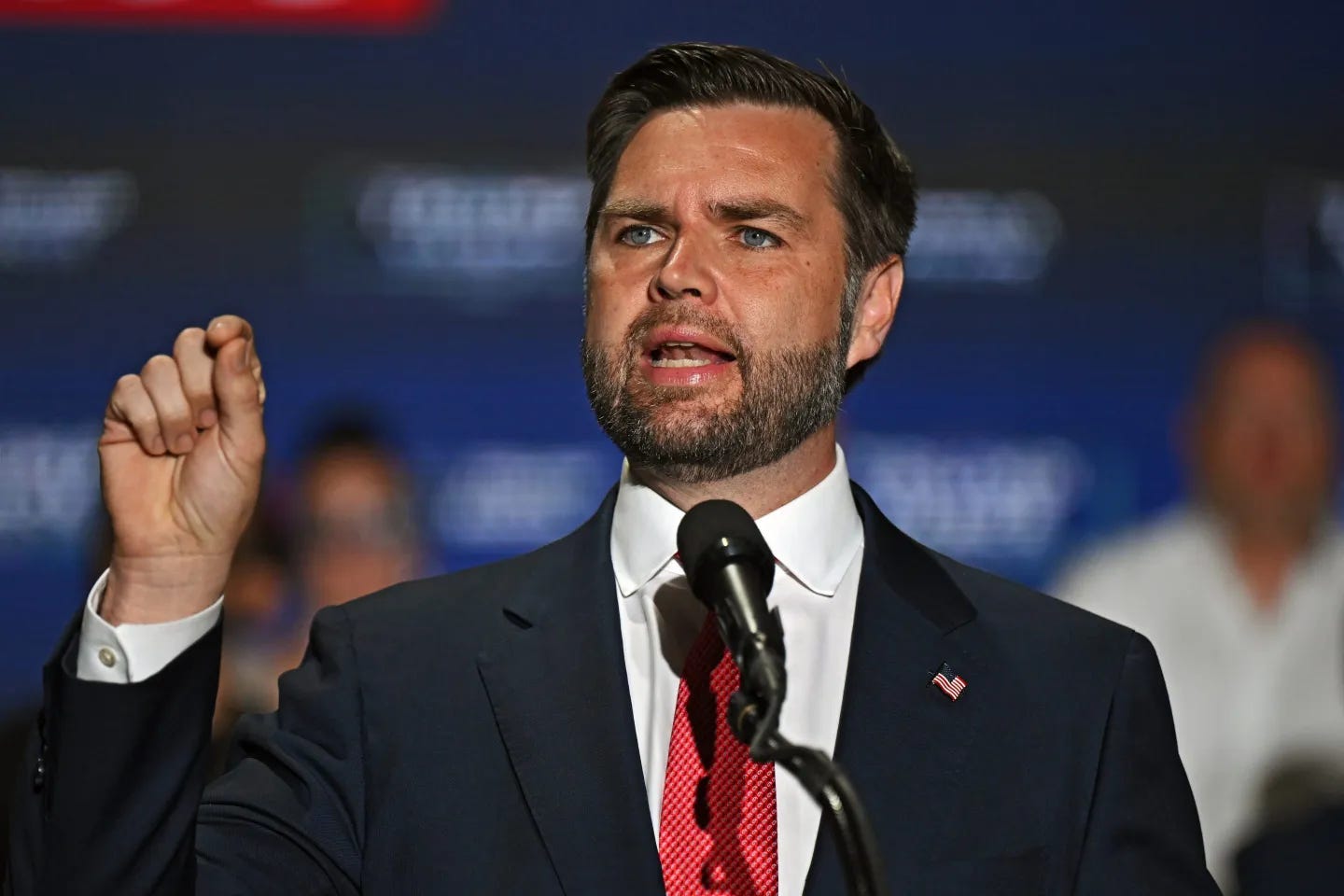
Vance has been the leader of the economic populist front in the second Trump administration, building on his brief Senate career, during which he championed these ideas and often made common cause with progressives in the process. Vance promoted various anti-free-market interventions while in the Senate and has been a leading supporter of the aforementioned MAGA leftist policies. He has repeatedly praised former Biden FTC chair Lina Khan, one of that administration’s worst economy-related picks. Khan wielded antitrust law as a cudgel to slow growth, hurt American businesses, limit the freedom of corporate decision-making, stifle American innovation, and harm consumers in the process. Of course, she did not think she did any of these things, but the results don’t lie – the Spirit failure, the iRobot bankruptcy, and several other corporate failures are due to her overbroad interventionism. Now, unsurprisingly, she is working for the hardcore leftist mayor of New York City, Zohran Mamdani. Vance has also worked in the Senate alongside progressive stalwart Elizabeth Warren, co-sponsoring economic populist legislation and joining to attack business and increase the regulatory burden in a misguided effort to help ordinary Americans. If Vance does indeed earn the mantle of Trump heir, he will firmly install MAGA leftism in the Republican Party, throwing out classically conservative economic ideas.
Donald Trump is no leftist. In fact, he may be the most outwardly and rhetorically anti-leftist president of my lifetime. But that does not mean that all of his administration’s policies – or even his personal instincts – always follow suit. On the economic front, this is especially pronounced. The MAGA movement is far more like the progressive left than it is the conservative right when it comes to those critical issues. They are big government statists who seek federal intervention in the free market, are skeptical to hostile of large corporations, support big labor unions, promote price controls, and abhor Wall Street, the tech sector, and the pharmaceutical industry. If you laid these policies out in front of someone from 2010, 2000, 1990, or 1980, they would label them as left-wing; that the ostensibly right-wing MAGA movement has embraced them does not change their partisan valence.
MAGA leftism is very real and it is an utter repudiation of the conservative view of economics. One can only hope the fever breaks after Trump himself leaves office, but that may very well be a pipedream, especially if Vance is his successor. If both sides of the partisan divide embrace failed progressive economics, America will be much worse off.
When I use this term, I’m describing the mainstream conservative movement in the post-WWII era, exemplified by William F. Buckley and National Review, Barry Goldwater, and Ronald Reagan.
I’m thinking of people like Gary Cohn, Steve Mnuchin, Larry Kudlow, and others in the first term, as well as Scott Bessent in this one, when I talk about more normal conservatives. When I’m talking about the insane tariff people, I’m primarily thinking of Jamieson Greer and the awful Peter Navarro. As an aside, I would include Trump’s tariff obsession as part of MAGA leftism, but it does have a longer and more complicated history as an undercurrent in the conservative movement, so it doesn’t fit the mold as well as the other examples. If you want to learn why tariffs are dumb and bad, search the archives here at Rational Policy; you’ll surely find what you’re looking for.