

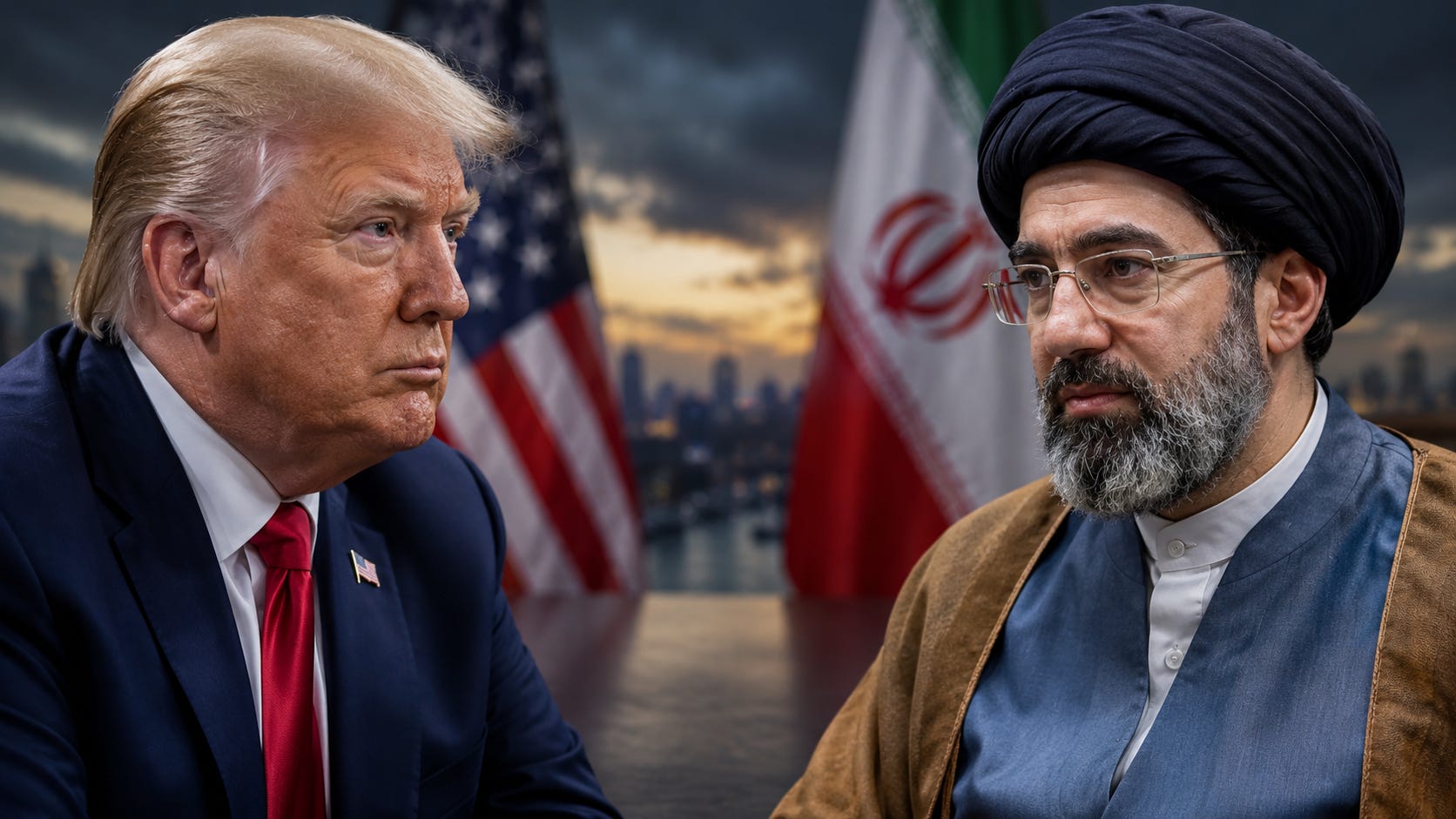
I’ve returned to the pages of National Review again, discussing the latest US-Iran memorandum of understanding. My piece takes a different approach than the usual criticism (of which I have plenty!1), instead focusing on why any deal with the Iranian regime is a fool’s errand. I explain the three major structural factors that preclude the regime from making a deal that is good for America and undercut their claims on enforcement and compliance. The regime’s legitimacy rests on staunch opposition to the “Great Satan” of America, it lacks the ability to enforce deal terms on radical and autonomous IRGC cadres, and the regime lies like it breathes. All of these factors make a deal with Iran worth less than the paper it is written on.
Below is an excerpt, but the whole essay can be read here.
In many ways, this whole back-and-forth misses the forest for the trees. It does not particularly matter if this deal is in some ways better or worse than the JCPOA. It does not much matter whether Iran has agreed to our demands or we have agreed to theirs. What matters is the ground truth: No deal that could possibly be agreed to by the Islamic Republic of Iran is a good one for the United States. Three major structural factors internal to the Iranian regime itself ensure that this is the case.
First, the regime’s domestic legitimacy depends on its stringent opposition to America. Since the Islamic Revolution in 1979, the regime has rested on three pillars to justify its existence to the Iranian people. It claimed to be a better steward of the country than the government of the shah, it repudiated the hereditary monarchy and replaced it with a theocratic government of Islamic jurists, and it promoted itself as the mortal enemy of the United States, orienting all foreign policy to defeating the “Great Satan.” Today, two of those three foundational claims have collapsed. Over the past 47 years, the mullahcracy has proven to be a complete failure at improving the lives of its citizens, funneling funds best used to face down domestic challenges into foreign terrorist proxies, allowing the Islamic Revolutionary Guard Corps (IRGC) to co-opt much of the country’s productive economy, and brutally repressing ordinary Iranians who dare speak up in protest. After the killing of longtime leader Ali Khamenei, the second pillar has fallen as well; his son Mojtaba, nobody’s idea of a respected Islamic jurist, has been appointed supreme leader with the backing of the IRGC. All the regime has left is staunch opposition to Washington, something on which it has doubled down for the past three months. There is no way for the regime to surrender to American terms and continue to rule Iran, so any deal must be heavily biased toward the interests of the mullahcracy.
Second, the regime as it exists today — massively degraded, with less centralized control than ever before — may not even be in a strong enough position to enforce a deal on its own radical cadres. Since the decapitation strikes that began this war in February, the Iranian response has relied on disparate and self-directed regional factions within the IRGC, granting serious autonomy to each sector to prosecute the war; this at least partly explains the continued cease-fire violations and the maintenance of the threat to commercial shipping. Our Iranian interlocutors may not be in control of the kinetic situation, especially if they are, as media reports suggest, politicians, not military leadership. If a deal is viewed as suboptimal by the most fundamentalist segments of the IRGC, even if leadership disagrees, they simply will not comply with it. And when the biggest current issue, the disruption of Hormuz, is being carried out entirely by rhetorical threats, the suggestion of mines, and occasional low-level drone launches, those independent actors within the system have immense ability to ruin the bargain. This has the potential to scuttle any deal we make, even if it receives widespread buy-in at the top levels of the regime. Hoping that our negotiating partners are able to enforce our demands on intransigent armed radicals is at odds with the evidence of reality.
Finally, we come to the Iranian regime’s specialty: deception. The Islamic Republic has routinely dissembled in the past. It says one thing and does the opposite. It talks out of both sides of its mouth, making conciliatory noises in discussions with credulous Westerners while simultaneously redoubling its malign efforts. Nowhere was this more obvious than with respect to the JCPOA. Iran repeatedly averred that it would never seek a nuclear weapon and solely intended to use nuclear energy for peaceful purposes. This was a lie, as we discovered when the Israelis spirited away the regime’s secret nuclear program archive from Tehran in 2018. It turns out that they never stopped working on weaponization, never intended to stop working on weaponization, and sought to use the fig leaf of the nuclear deal to protect its clandestine program until breakout was assured. They have returned to this strategy of mendacity throughout this war, including in the current cease-fire, during which the Strait of Hormuz was supposed to be open to all shipping. Clearly, it isn’t. Their continual redefinition of terms in these very negotiations similarly shows their deceitfulness.
Believing that Iran will comply with an agreement it makes is foolish in the extreme. The regime has proven again and again who they are and how they act. They lie, they cheat, and they find any and every way to undermine what has been agreed to. This constant deception, paired with the other structural factors detailed above, makes it impossible for any deal we sign with Iran to be a good or durable one for us. This agreement with the Iranian regime is not worth the paper it is written on. American leaders must recognize this fact and act accordingly. Anything less is courting disaster.
Tune in to the next Rational Policy Podcast (Episode 41) to hear all about it.