“When in the Course of human events, it becomes necessary for one people to dissolve the political bands which have connected them with another, and to assume among the powers of the earth, the separate and equal station to which the Laws of Nature and of Nature’s God entitle them, a decent respect to the opinions of mankind requires that they should declare the causes which impel them to the separation.
We hold these truths to be self-evident, that all men are created equal, that they are endowed by their Creator with certain unalienable Rights, that among these are Life, Liberty and the pursuit of Happiness. That to secure these rights, Governments are instituted among Men, deriving their just powers from the consent of the governed, That whenever any Form of Government becomes destructive of these ends, it is the Right of the People to alter or to abolish it, and to institute new Government, laying its foundation on such principles and organizing its powers in such form, as to them shall seem most likely to effect their Safety and Happiness. Prudence, indeed, will dictate that Governments long established should not be changed for light and transient causes; and accordingly all experience hath shewn, that mankind are more disposed to suffer, while evils are sufferable, than to right themselves by abolishing the forms to which they are accustomed. But when a long train of abuses and usurpations, pursuing invariably the same Object evinces a design to reduce them under absolute Despotism, it is their right, it is their duty, to throw off such Government, and to provide new Guards for their future security. Such has been the patient sufferance of these Colonies; and such is now the necessity which constrains them to alter their former Systems of Government.”
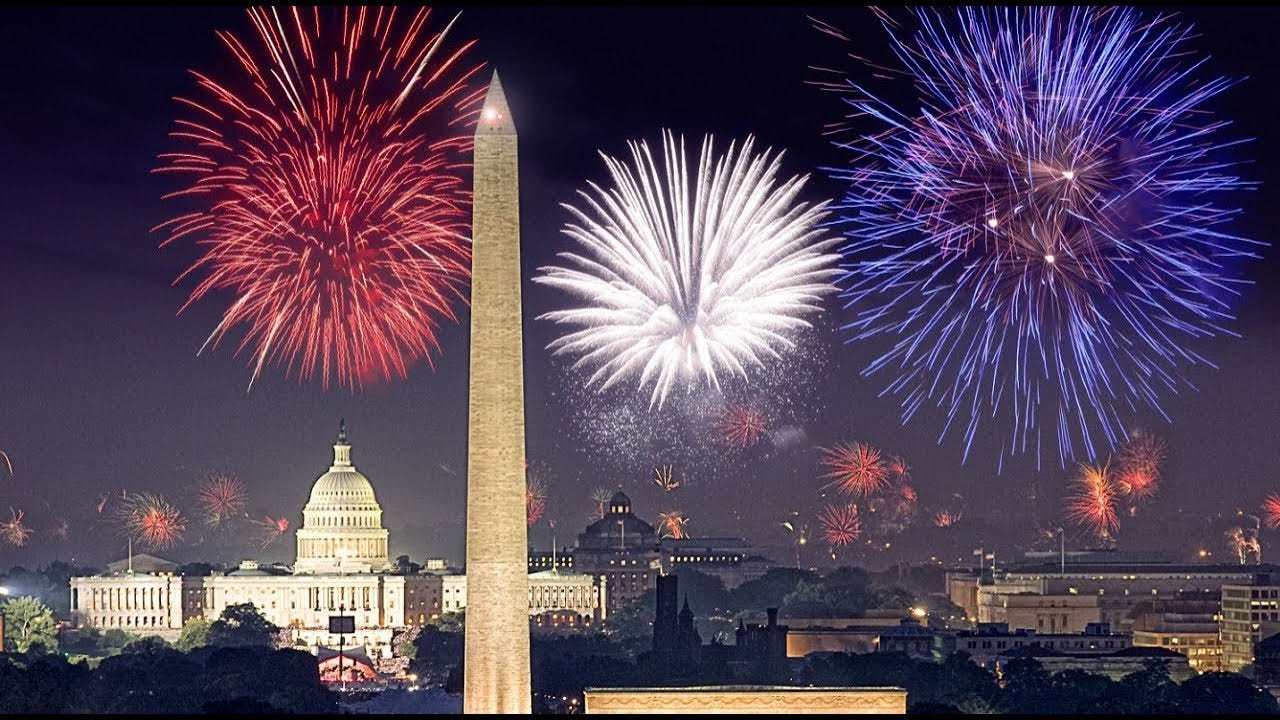
Those are the opening words of the most important document written by human hands in the past 2000 years, the Declaration of Independence. That historic work of political rhetoric was proclaimed on this day a quarter of a millennium ago, marking a crossing of the proverbial Rubicon into outright revolution against the British Crown and the eventual creation of the United States of America. This was also a burn-the-boats moment for the men who signed it, as they had just attached “their lives, their fortunes, and their sacred honor” to an attestation of treason. The immortal Benjamin Franklin recognized this, remarking (perhaps apocryphally) upon the signing of the Declaration in Philadelphia that now “We must all hang together, or most assuredly we will all hang separately.” The risk was palpably real, as the British were on the march and the Continentals on the retreat for most of the war to that point – the Redcoats would go on to capture and occupy Philadelphia itself just over a year later. This immense dedication in the face of a seemingly insurmountable challenge would come to represent the best of America for the next, resoundingly successful, 250 years.
Two hundred and fifty years is an incredible amount of time for anything to endure, much less a newborn nation, attempting to split off from the most powerful empire on the planet. Not only was the deck stacked against the Founding Fathers, the ideals that they centered their proposed polity on were historically radical. Personal liberty, human freedom, restrained government, and individual rights were incredibly groundbreaking concepts at the time and remain so today. They were beginning to be adopted by the elite intelligentsia in parts of Europe – absolutism was still the rage on much of the Continent – but never before had they formed the basis for a political revolution in the real world. The founding of America was an experiment in liberty the likes of which mankind had never seen. And its success was not guaranteed, as much as we tend to read history backwards and assume the glorious country that we live in today was set in stone from the start.
But America has always been a contingent nation. A bold hypothesis – that a continental republic could be based on the ideas of limited government and individual liberty – constantly being tested against the harshest of trials, with no foreknowledge of the end result. Foreign invasion, domestic insurrection, political violence, constitutional crisis, economic depression, terrorist attack, natural disaster, total war, and more. We survived them all. Hell, we didn’t just survive; we thrived. From our earliest days as an independent nation, we have continually endeavored to make America a better place than it was for our forebears, all while retaining the same radically inventive and profoundly moral ideals they permanently etched into our national consciousness. Not only have we strived for that result, we have achieved it. We have defeated our enemies, foreign and domestic, all while safeguarding the things that make us truly exceptional. And we have done so over and over. There is no need to “Make America Great Again” because America never stopped being great.
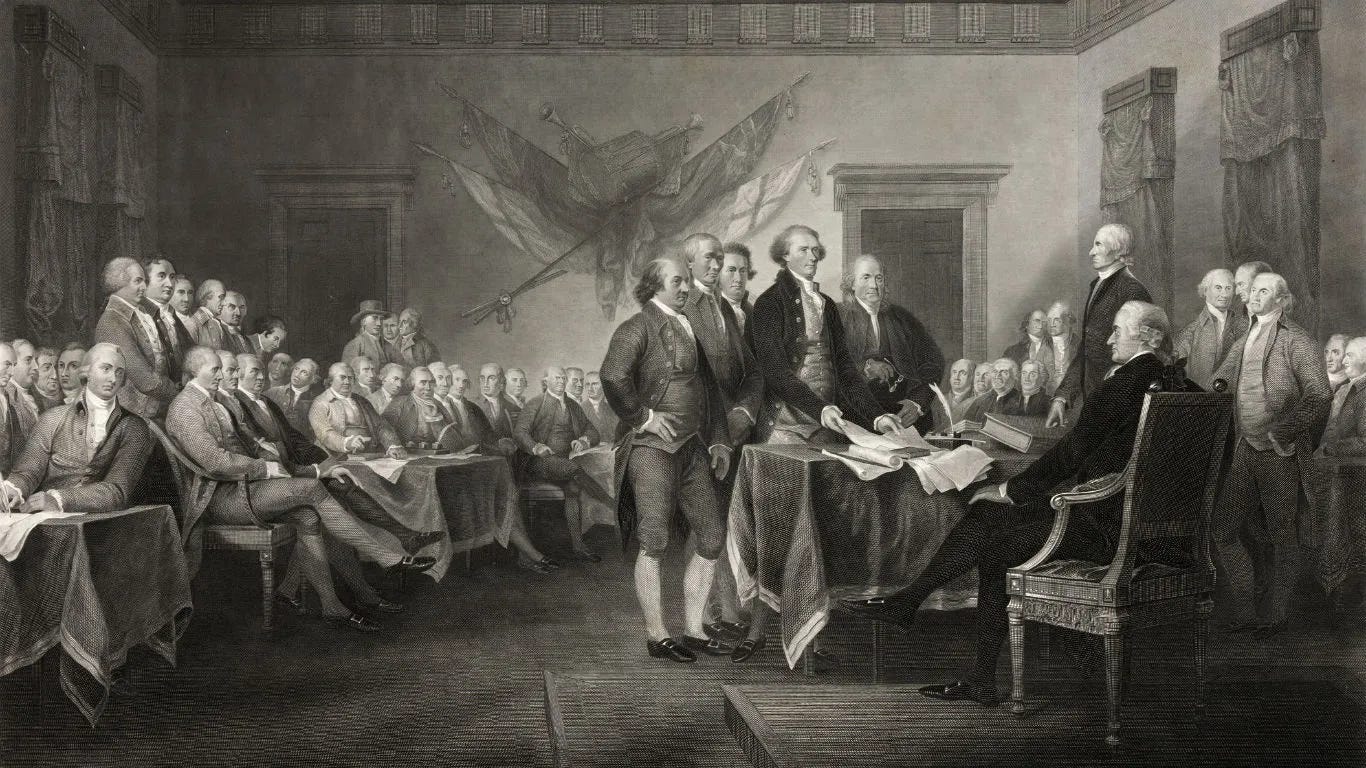
America was great in 1776 when 56 men put their signatures to a document that would either change the world or cost them their lives – perhaps both. It was great when we asserted that the Western Hemisphere would forever be free of foreign occupation. It was great when we fought back the scourge of internal rebellion and demolished the slave power. It was great when we built the canals, railways, roads, and infrastructure that connected our nation and hypercharged our economic prosperity. It was great when we created the industries, invented the tools, and built the institutions that have lifted billions from poverty and massively improved global living standards. It was great when we traveled across oceans to defeat totalitarian, genocidal foes who threatened America. It was great when we expanded the promissory note of the Declaration to all Americans, regardless of race or sex. It was great when we consigned the ideology of communism to the dustbin of history. It was great when we sent men to the Moon – and it will be great when we send them back once again.
America has always been great. What it hasn’t always – or ever – been is perfect. But no institution, polity, or nation created by fallible humans could be. Our nation’s founding ideals, however, are perfect. And nobody has ever explained that better than our 30th president, the great Calvin Coolidge, to celebrate this auspicious day one century ago.
“About the Declaration there is a finality that is exceedingly restful. It is often asserted that the world has made a great deal of progress since 1776, that we have had new thoughts and new experiences which have given us a great advance over the people of that day, and that we may therefore very well discard their conclusions for something more modern. But that reasoning can not be applied to this great charter. If all men are created equal, that is final. If they are endowed with inalienable rights, that is final. If governments derive their just powers from the consent of the governed, that is final. No advance, no progress can be made beyond these propositions. If anyone wishes to deny their truth or their soundness, the only direction in which he can proceed historically is not forward, but backward toward the time when there was no equality, no rights of the individual, no rule of the people. Those who wish to proceed in that direction can not lay claim to progress. They are reactionary. Their ideas are not more modern, but more ancient, than those of the Revolutionary fathers.”
Our individual rights, our system of divided powers, our federalist constitution, our restrained national government, our presumption of liberty, our ability to adapt while keeping our feet firmly planted in the soil of our founding, our pioneering and visionary attitude, and our resilience in the face of overwhelming odds. These are the characteristics that make us unique. Revolutionary, even. They are the foundational building blocks of our modern republic. Without them, our nation would be unmoored in a way that most others – based primarily on shared factors like ethnicity, religion, or language – would not be. We are, at heart, a polity centered on ideas and ideals. And, as President Coolidge so beautifully stated, those propositions are final. Unimpeachable. Insurmountable. Perfect.

And now they have proven themselves remarkably durable. They have endured, through trials and tribulations, for a full quarter of a millennium. Two hundred and fifty years. And that is not due to mere entropy, but the repeated exercise of human agency to consciously choose liberty – messy, complicated, risky, difficult liberty – again and again. The men who signed that Declaration understood what they were signing up for, but they knew it was worth it, no matter the cost. And they were incredibly optimistic for the future, despite the odds stacked against them. John Adams explained this eloquently in a letter to his wife Abigail in July 1776:
“I am well aware of the Toil and Blood and Treasure, that it will cost Us to maintain this Declaration, and support and defend these States. -- Yet through all the Gloom I can see the Rays of ravishing Light and Glory. I can see that the End is more than worth all the Means. And that Posterity will tryumph in that Days Transaction, even altho We should rue it, which I trust in God We shall not.”
Our Founding Fathers knowingly set to us a Herculean task: to keep the republic that they made for us. For two hundred and fifty years, we have. Let’s choose that thorny, painful, profoundly rewarding path for another two hundred and fifty.
Happy birthday, America. May you live forever in liberty.