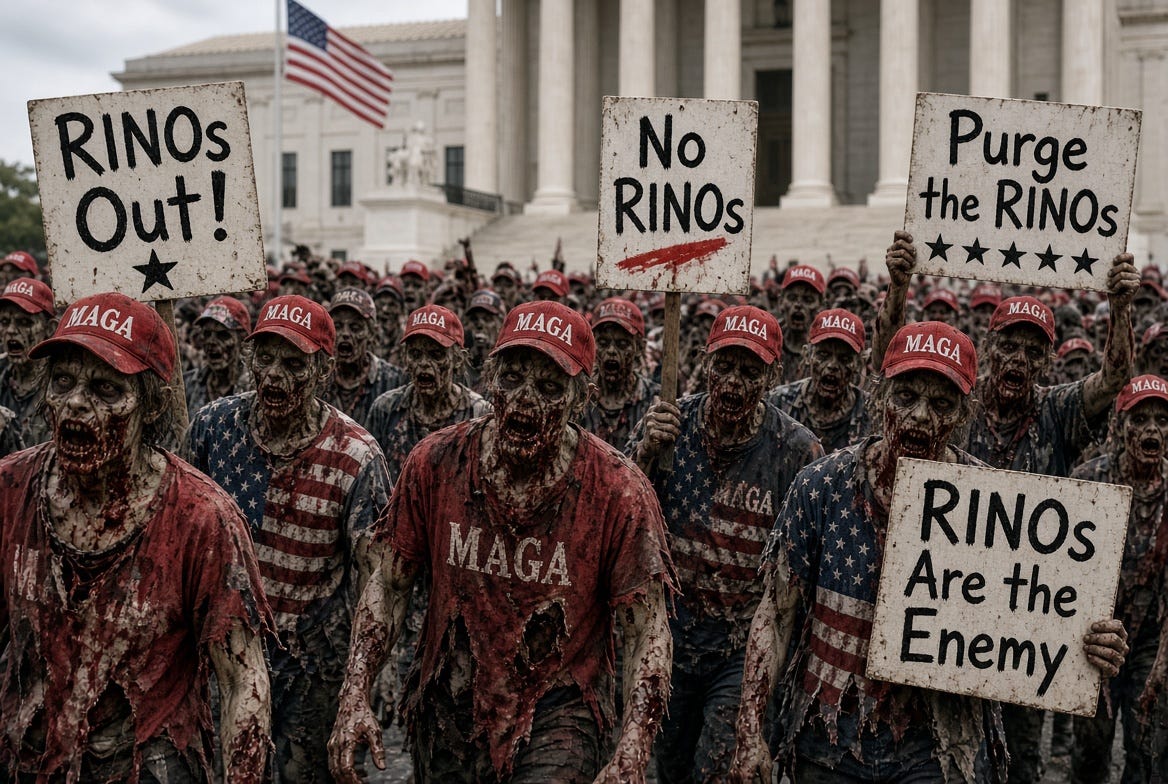
“I’d rather have 30 Republicans in the Senate who believe in the principles of freedom than 60 who don’t believe in anything.”
That quote, from then-US Senator Jim DeMint (R-SC), came in the midst of the rising 2010 Tea Party wave that overtook the Republican Party and swept into Congress on promises of radical change. DeMint’s purism seemed to pay off in the immediate term, with the GOP surging to a 6-seat gain in the Senate behind Tea Party-linked politicians like Marco Rubio (FL), Rand Paul (KY), Pat Toomey (PA), Mike Lee (UT), and Ron Johnson (WI), cutting the Democrat lead in the senior chamber from 59-41 to 53-47. That success bred hubris, presaging defeat not only in the 2012 presidential contest, but also in that year’s race for control of the Senate, with Democrats gaining two seats. Fatally flawed Tea Party candidates – notably Todd Akin (MO) and Richard Mourdock (IN) – contributed heavily to that avoidable loss. DeMint and his fellow travelers assumed that 2010 was a mandate for the total defeat of the Obama presidency, but this proved to be a bridge too far for most voters.
DeMint stepped down from the Senate shortly thereafter, taking the job at the helm of the Heritage Foundation and proceeding to launch that venerable institution’s slow, but inexorable slide into the abyss. The 2012 defeat, premised at least partially on the Tea Party’s overreach and poor candidate selection, allowed President Obama to work with a pliant Senate during the first two years of his second term, confirming judicial and executive nominees in significant numbers. In that case, the quest for purity led to an unnecessary defeat and very real, lasting political consequences; most right-of-center Americans would probably have preferred control of the upper body of Congress with a few squishes or ‘RINOs’ (Republicans In Name Only) in the caucus to two more years of Obama with a friendly Senate.
There is a lesson to be learned in that anecdote about sacrificing the good at the altar of the perfect and causing meaningful harm in the process, but it does not seem like that the supporters of the latest fad to take over the American right – MAGA – have internalized that lesson. Instead, they have lived through two more iterations of the same hubristic cycle in 2022 and now 2026, failing to learn a single thing in the process. They forced out ‘RINOs’ to make way for Trump’s handpicked MAGA candidates, nearly all of whom have failed miserably and lost otherwise winnable races. We have had Kari Lake and Blake Masters in Arizona, Mehmet Oz in Pennsylvania, Herschel Walker in Georgia, Ken Paxton in Texas, Darline Graham in South Carolina, and more. All competitive races that were lost because the vaunted ‘base’ and the online influencers who front-run it desired purity over victory and loyalty to Trump over actual electability.
And now they’re ramping up to do it all over again, centering their preexisting grudges as the cause of the 2026 midterm wipeout and focusing on ideological purity (a.k.a. hewing to their conception of what the Right should be) over pragmatic winning. Instead of forcing a reckoning with the consequences of a broadly unpopular president and an agenda of overreach and alienation of key 2024 constituencies, they’re doubling down on what brought them low, blaming either phantom ‘neocons’ and the Iran War, squishes who stymied the president’s ambitious America First agenda, or impossible levels of fraud and Democrat malfeasance for their historic rout. Some are celebrating the eviction of the ‘RINOs’ as a major silver lining of the loss, with thoughts that these seats will all be won back by hardcore America First candidates in 2032 after Republican victories in the next elections. This is fantastical in the extreme.
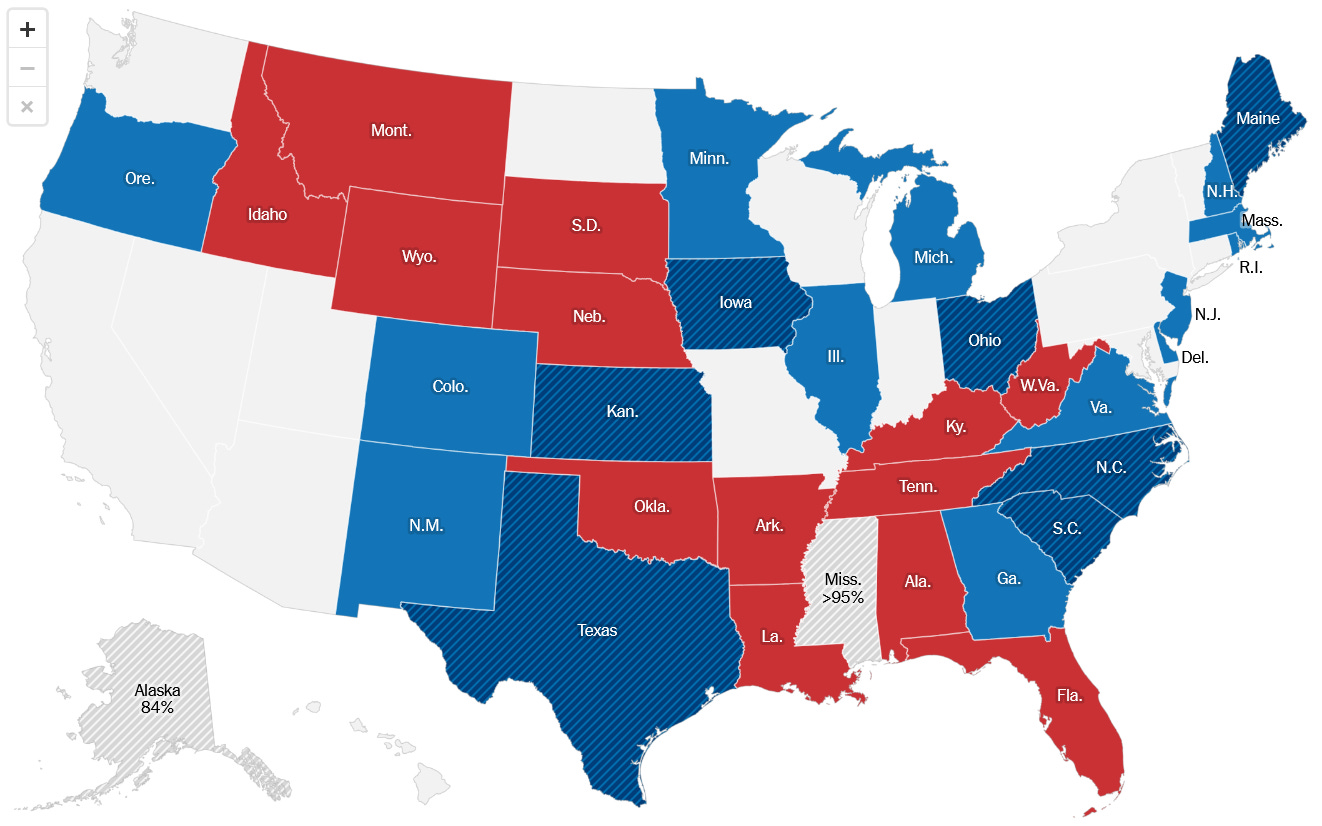
Some of these lost seats are in states that are trending blue or were represented by an outgoing moderate, notably Maine and North Carolina. Others are seats that likely will not go red anytime soon, like Minnesota and Michigan. Yet more are up for grabs given the Democrat lean of major metropolitan areas, such as Texas and Georgia. These are not gimmes in 2032, even if the overall environment is theoretically favorable for Republicans. Nominating unpalatable hardliners who embrace unpopular policies and a Trumpian legacy that has been directly repudiated by the majority of American voters is political suicide going forward. That applies to 2028 and 2030 as well, two cycles with less favorable maps for Republicans than 2026/32.
And yet the MAGA/New Right contingent is fixated on evicting ‘RINOs’ who have already shown electoral and institutional success in exchange for ideologically ‘pure’ candidates who are more polarizing, less electable, and more likely to lead to greater, not lesser, Democrat control of Congress. Influential figures in the movement are more focused on the supposed existential risk of John Thune (R-SD) retaining an internal caucus leadership position than they are the actual reality that a still-unpopular left just beat the tar out of them a week ago, with voters largely rebelling against MAGA’s favorite policies. For a crew that repeatedly claims that the ‘establishment’ GOP only does “principled losing,” they sure seem to like lashing themselves to the mast of unpopular principles and going down with the ship.
Unless and until this counterproductive virtue signaling – and yes, that is exactly what this purity test culture is – is banished from the Republican Party and the broader political right, the left will undo everything positive about the Trump era and forge forward with their long march through American life, much to the detriment of conservatism. But rejecting this failed approach is eminently doable. Majorities in Congress are achievable with the right candidates and the right policies, ones that appeal to the majority of voters, not just to the insatiable perfectionists of the vaunted ‘base’. Winning elections is about finding the right person for the right race, not trying to jam a square peg ever-harder into an unchanging round hole. Moderates or <gasp> ‘RINOs’ may be the only sort of right-leaning candidate that can win in blue or purple states and districts. They may have to compromise on certain positions to do so, making the future caucus more ideologically heterogeneous and fluid. Still, actual durable incremental positive change in a conservative direction is far preferable to being a principled, yet perpetual, minority that can hold fast to its radical views because it has no chance whatsoever of enacting them into law.
If the MAGA New Right contingent would rather be a small minority faction that complains about the left and ‘RINOs’ 24/7 on TV and social media, while allowing said left to run roughshod over the country, they can certainly choose that fate. But they surely can’t claim it’s something novel that has never been tried. And if we’re in the business of recycling old ideas, I, for one, would take ‘zombie Reaganism’ over ‘zombie DeMintism’ any day of the week.